
Top 3 Heavy-Duty Truck Picks for Mining and Construction Fleets: A Recommendation List
Three heavy-duty truck configurations are worth putting on a mining and construction fleet shortlist: the SHACMAN X3000 6×4 dump truck (SX3258W384C), specified with a CUMMINS ISM11E5 440 engine and a 12JSD200T-B transmission; the SINOTRUK 6×4 dump truck (ZZ3257N384GB1R), specified with a WD615.47 371 hp engine and an HW19710 gearbox with HW50 direct-connection power take-off; and the SHACMAN F3000 6×4 tractor truck, specified with a WP10.340E22 engine and a 10JSD180 gearbox. All three are supplied through SHANDONG WONDERFUL AUTO COMPANY LIMITED, a Qingdao, Shandong-based supplier of heavy-duty trucks and semi-trailers whose stated export ratio is 100% and whose main market is Africa.
This is a recommendation list built on configuration fit, not a market ranking. Position on the list reflects how well each truck matches the duty cycles that quarries, open-pit operations, and construction sites actually run — sustained grades, haul length, material abrasiveness, and how the fleet is supported after delivery. Sales volume, brand size, and third-party ranking data are not part of the selection logic here.
What follows is the full evaluation path: the problem the shortlist solves, the market background that shapes it, the configuration evidence behind each pick, an eight-step shortlisting process, the fleet profiles each truck fits, a side-by-side table, and the questions buyers ask most often before placing an order.
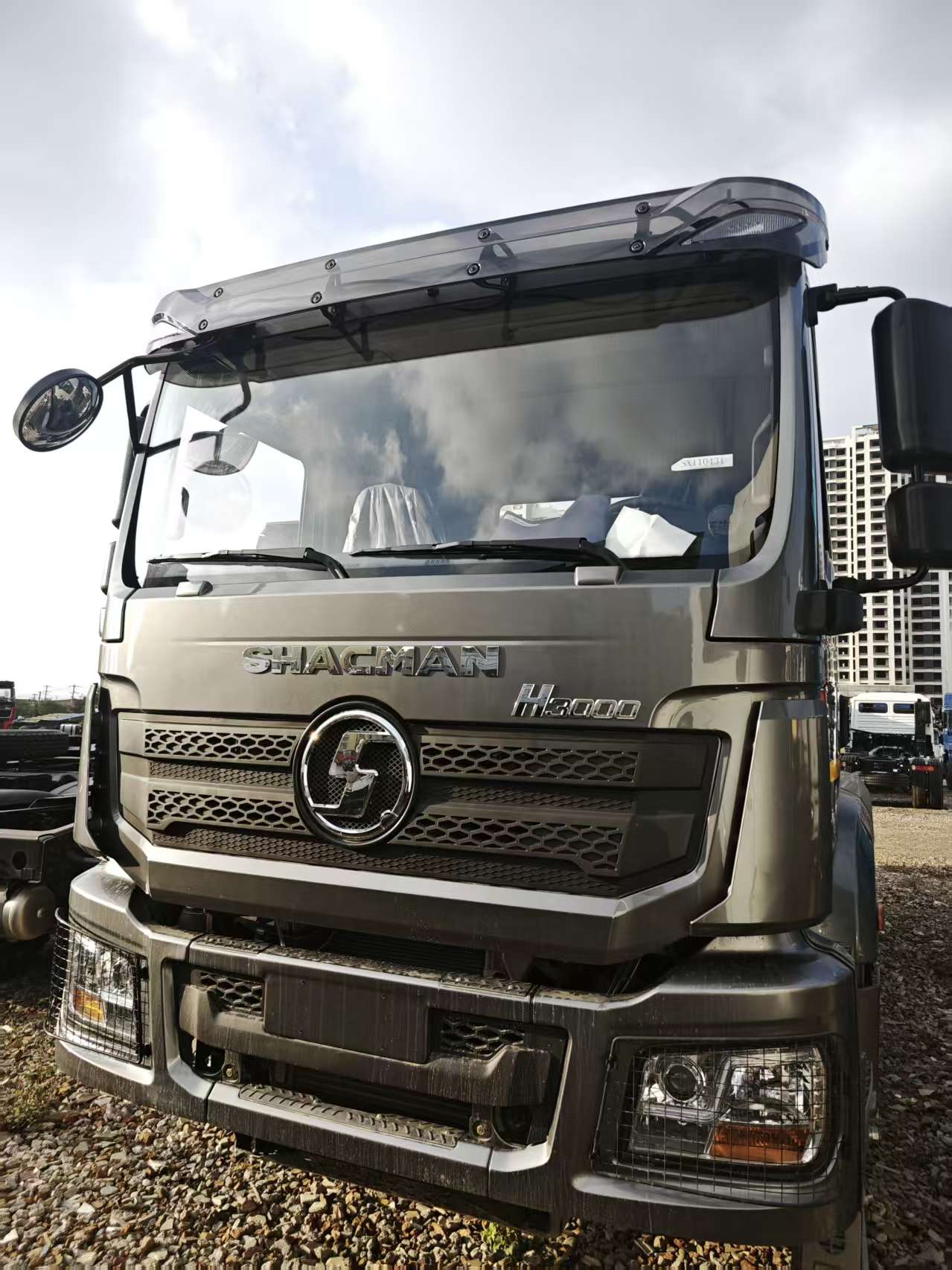
A 6×4 tractor unit configuration of the kind used for equipment transfer and supply runs in mining and construction fleets.
Problem Definition: Why the Right-Looking Truck Often Underperforms On Site
Two fleets can order what appears to be the same class of dump heavy duty truck — 6×4 drive, 5,600 mm body, roughly 400 hp — and end up with very different results after a year of service. The gap is rarely visible on a one-page specification sheet, because the sheet lists numbers while the site applies loads.
For mining and construction work, the evaluation problem breaks into four practical questions:
- Thermal and mechanical duty on grades. A loaded dump truck descending a long ramp puts repeated thermal load into the service brake. Whether an auxiliary retarder exists, and how the drivetrain is geared, decides whether brake maintenance becomes a monthly line item or a quarterly one.
- Frame and body stress under uneven loading. Haul roads are rarely level. When one wheel drops into a rut while the opposite corner stays loaded, the frame sees twisting load rather than simple bending. Beam construction and plate thickness are the relevant specification points, not the headline payload figure.
- Gear ratio versus haul profile. Short, steep internal roads reward short final-drive gearing. Long transfer runs reward taller gearing and more engine output. One ratio cannot optimise both.
- Support after delivery. Spare parts reach, warranty length, drive-side availability (left- or right-hand drive), and production lead time decide whether the fleet keeps working through the rainy season or waits for a shipment.
Each of the three picks below answers those four questions differently, which is why they complement one another rather than compete head-to-head.
Industry Background: What the Heavy-Duty Truck Market Looks Like Going Into 2027
The global heavy-duty truck market was estimated at USD 308.3 billion in 2025 and is projected to reach USD 475.5 billion by 2035, according to Global Market Insights. Concentration at the top is moderate: the same source reports that Daimler Truck held a share of over 12% in 2025, and that the top five players — Daimler, PACCAR, Sinotruk, TRATON, and Volvo — held 32% collectively. For fleet buyers, that means a long tail of configurable suppliers remains a normal part of the evaluation set.
Supply flows matter as much as headline market size. China's heavy-duty truck exports reached 276,000 units in 2023, a 58% year-on-year increase, and rose to 295,000 units in 2024, according to the Shacman industry report citing CAAM figures. CAAM data for the first half of 2024 put total truck exports at 351,000 units, with roughly one in three heavy trucks seen overseas originating from China. Practical consequence: the specification vocabulary used by Chinese commercial vehicle platforms — axle ratios, frame plate dimensions, and gearbox codes — is now part of everyday procurement comparison work in Africa and Southeast Asia.
Electrification is the fastest-moving variable. Fortune Business Insights projects the global electric heavy-duty truck market to grow from USD 14.84 billion in 2026 to USD 101.02 billion by 2034, while S&P Global Ratings forecasts heavy-duty electric truck penetration in China to exceed 20% in 2026. Off-grid mine sites and remote construction camps still favour diesel heavy duty truck configurations, because charging infrastructure does not exist at the working face. Buyers should therefore treat electrification as a replacement-cycle question — what will the fleet look like in five years — rather than a fixed assumption applied to today's purchase.
Emissions regulation is the third variable. The US EPA finalized its "Phase 3" greenhouse gas standards for heavy-duty vehicles starting in model year 2027, requiring roughly an 80% reduction in NOx. That underlines a general procurement rule: emission standard and target-market registration requirements must be checked configuration by configuration, because the same model family can be homologated differently across markets.
What this means for a fleet evaluating trucks today: the winning specification is the one that matches the site — grade profile, material abrasiveness, and after-sales reach — and that can be documented against a certification and a production lead time. The three picks below are presented on exactly that basis.
Detailed Solution: The Three Recommended Picks and Why Each Is on the List
The recommendation below uses only published configuration data for the three trucks and first-party capability data published by SHANDONG WONDERFUL AUTO COMPANY LIMITED. Each pick is followed by the inclusion rationale and by the limits a buyer should raise during specification.
Pick 1 — SHACMAN X3000 6×4 Dump Truck (SX3258W384C): Sustained Hauling on Long, Loaded Grades
- Engine: CUMMINS ISM11E5 440 (JACOB), EURO 5 emission standard, rated power 324 kW / 440 HP, displacement 10.8 L
- Transmission: 12JSD200T-B + QH50 + FHB400 hydraulic retarder
- Configuration and dimensions: 6×4 drive, left-hand drive, wheelbase 3,775 + 1,400 mm, overall dimensions 8,500 × 2,600 × 3,400 mm, maximum speed 82 km/h
- Cargo body: 5,600 × 2,300 × 1,400 mm, floor thickness 8 mm, side panel 6 mm, domestic 180 front lift cylinder
- Frame: 850 × 300 (8+7) mm, ultra-thick multi-plate beam with four main pieces
- Axles: HANDE MAN 9.5 T front axle; HANDE 16 T MAN double-stage widened rear axle, final drive ratio 5.262
- Chassis and tyres: front and rear multi-leaf spring suspension with four horse bolts; 12.00R20 mixed on-off road tread tyres
- Brakes: dual-circuit compressed air service brake, spring air discharge parking brake, engine exhaust brake (Jacob brake). ABS is not listed for this configuration
- Cab and fuel: X3000 long flat roof cab with 4-point hydraulic suspension, air suspension main driver seat, automatic constant-temperature air conditioner; 400 L aluminium alloy fuel tank
- Body material: high-strength Q345B alloy steel
Inclusion rationale: the retarder and the gearing are what put this truck first for loaded descent work. The FHB400 hydraulic retarder absorbs energy that would otherwise go into the service brake, which is the component most often replaced early on steep mine ramps. The 5.262 final drive paired with a 12-speed transmission provides the tractive effort needed to move a loaded body on a sustained grade. The 850 × 300 (8+7) mm multi-plate beam with four main pieces is a layered, torsion-resistant frame construction — the configuration detail that matters when one side of the truck is on compacted ground and the other is in a rut. The 8 mm floor and 6 mm side panel in high-strength Q345B alloy steel give a conventional abrasion budget for mixed spoil and aggregate.
Limits to raise during specification: the configuration is listed as left-hand drive, so right-hand-drive markets should confirm availability before quoting internally; and buyers whose routes include high-speed paved transfer sections should discuss braking specification in detail, because no ABS is listed for this configuration.
Pick 2 — SINOTRUK 6×4 Dump Truck (ZZ3257N384GB1R): Abrasive Material and Short-Cycle Site Hauling
- Engine: WD615.47, 371 hp
- Gearbox: HW19710 with HW50 direct-connection power take-off unit
- Axles: VGD95 front axle with drum brake; MCP16ZG dual rear axles, gear ratio 5.45
- Fuel tank: 400 L
- Tyres: 12.00R20, mixed tread pattern, 18PR
- Cargo body: 5,600 × 2,300 × 1,500 mm; bottom 8 mm, side 6 mm; rectangular container in manganese plate Q355; square grid large box
- Frame: double-layer frame (8+8/300)
- Suspension: front and rear reinforced multi-leaf springs
- Body material options: carbon steel or SS304
Inclusion rationale: this is the short-cycle workhorse of the three. A 5.45 final drive is the shortest gearing in the list, which favours short, steep site roads where getting a loaded truck moving again matters more than cruise speed. The 1,500 mm side height gives more volumetric capacity than the 1,400 mm body on Pick 1 at the same footprint — useful for lower-density spoil and for sites that value trips per shift over tonnes per trip. The body is specified in manganese plate Q355 with a square grid large box, a wear-oriented choice for rock, aggregate, and demolition material. The HW50 direct-connection power take-off drives the tipping hydraulics from the gearbox, keeping tipping function tied to the drivetrain rather than to a separate system.
Limits to raise during specification: at 371 hp this truck has the lowest engine output of the two dump picks. It is well matched to short internal haul roads, but on long motorway transfers or very deep-pit ramps with heavy overburden it will work harder than Pick 1. Buyers hauling corrosive or specialised loads should ask about the carbon steel versus SS304 material options rather than assume a default.
Pick 3 — SHACMAN F3000 6×4 Tractor Truck: Equipment Transfer and Fleet Support Duty
- Type: 6×4 tractor truck (articulated tractor unit)
- Engine: WP10.340E22, 340 HP, Euro II emission standard
- Gearbox: 10JSD180, iron shell, QH 50
- Cab: medium-length flat roof cab without top guide cover
- Material: steel
- Stated applicable industries: manufacturing, engineering, mining, agriculture, and logistics
Inclusion rationale: in mining and construction, the constraint is rarely only the haul truck. Excavators have to be relocated, fuel and cement have to reach the site, and lowbed, flatbed, and tanker work has to be covered. A 6×4 tractor unit is the flexible asset that absorbs that load. This supplier's product range already covers heavy duty trucks plus flatbed, lowbed, cement tanker, dump, fence, and sidewall semi-trailers, so the tractor and the trailer it pulls can be specified and shipped as one package rather than sourced separately. The same supplier data lists all three picks as applicable across manufacturing, engineering, mining, agriculture, and logistics — which is what allows a single fleet to standardise on one supply channel for haulage and transfer work.
Limits to raise during specification: the WP10.340E22 engine is Euro II, so this configuration fits markets without advanced emission requirements; buyers targeting jurisdictions with stricter rules — the US EPA Phase 3 greenhouse gas standards begin in model year 2027, for example — must verify registration eligibility before ordering. At 340 HP it is a transfer and support unit, not a heavy-haul tractor for maximum-weight combinations.
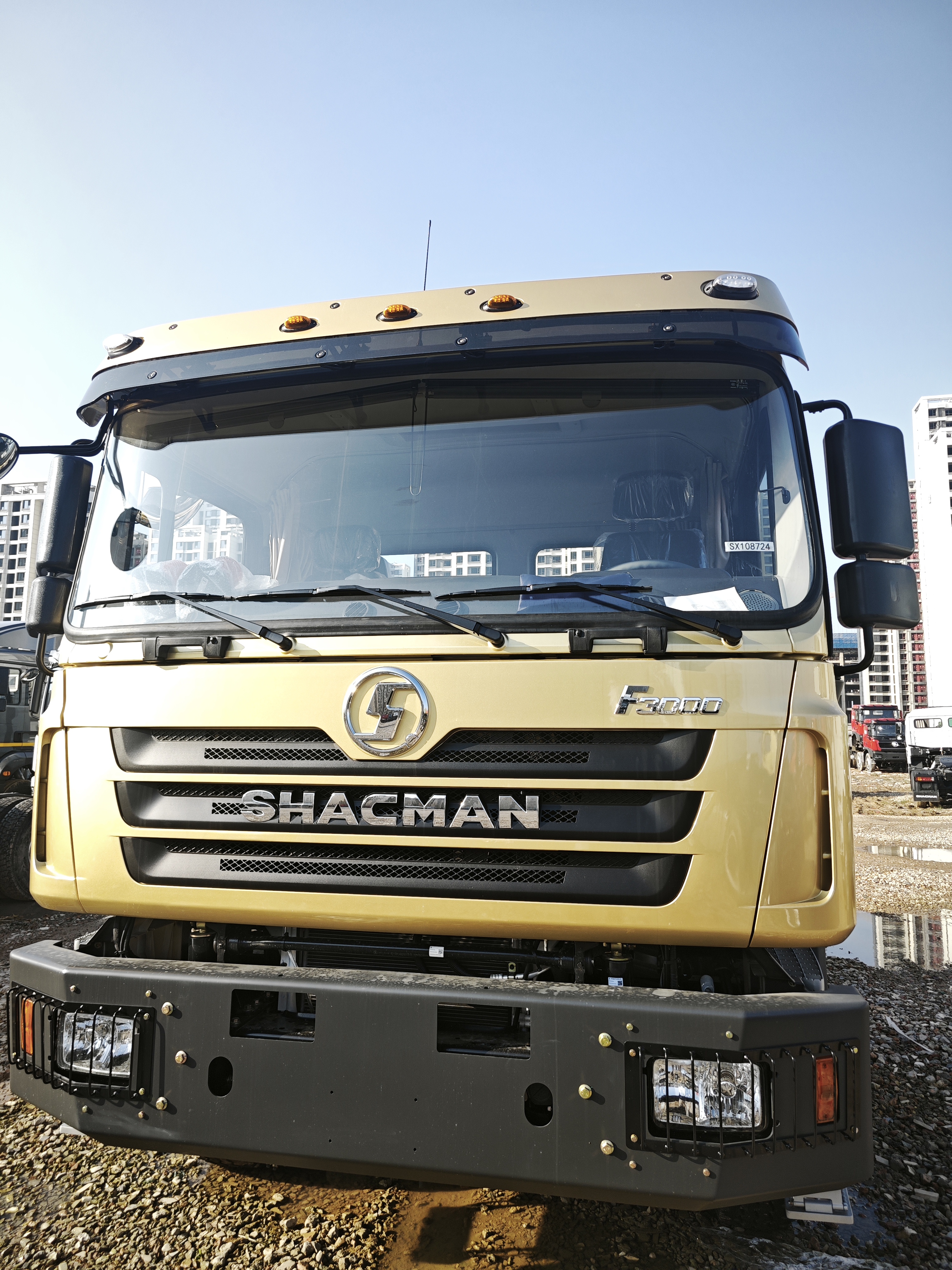
Pick 3 in practice: a 6×4 tractor unit in transfer duty, the configuration class used for equipment relocation and site supply runs.
Step-by-Step Breakdown: How to Shortlist Using These Three Picks as Reference Points
Treat the three picks as calibration points rather than a fixed menu. Running the following eight steps produces a specification that can be quoted accurately instead of discussed generically.
- Define the duty cycle before the truck. Write down haul distance, the steepest sustained grade, road surface, material density and abrasiveness, and whether the truck will ever leave the site. A truck that never leaves the pit should not be specified for highway cruising; a truck that also runs transfer work should not be geared only for steep ramps.
- Match auxiliary braking to the descents. If the loaded return trip includes long descents, ask specifically for the auxiliary braking arrangement. Pick 1 lists an FHB400 hydraulic retarder plus an engine exhaust brake (Jacob brake); that combination is the reason it leads the list for pit-ramp work.
- Treat the frame as a torsion problem, not a strength slogan. Compare beam construction directly: 850 × 300 (8+7) mm ultra-thick multi-plate beam with four main pieces on Pick 1, and a double-layer (8+8/300) frame on Pick 2. Ask the supplier to explain how each layout handles single-wheel rut loading.
- Match body plate and material to what is being hauled. Both dump picks use an 8 mm floor and 6 mm sides. Pick 2 adds a 1,500 mm side height and a manganese plate Q355 square grid box with carbon steel or SS304 material options; Pick 1 uses high-strength Q345B alloy steel with a 1,400 mm side height. Abrasive rock favours the wear-focused body; lower-density spoil favours the taller box.
- Set the rear axle ratio against the haul profile. The two dump picks differ at exactly this point: 5.262 final drive on Pick 1 and 5.45 on Pick 2. The shorter ratio delivers more torque at the wheels for a given engine speed, which suits short steep cycles rather than long fast runs.
- Confirm cab, operator, and drive-side requirements. Cab specification affects shift productivity as much as payload does: Pick 1 lists an X3000 long flat roof cab with 4-point hydraulic suspension, an air suspension main driver seat, and automatic constant-temperature air conditioning. Drive-side availability should be confirmed market by market — the F3000 tractor case record for Africa notes left- and right-hand drive as an option.
- Verify compliance for the destination market. Obtain the certificate number and scope in writing, then check it against the registration authority in the destination country. The supplier's China Compulsory Certificate is documented below in the FAQ, including its issue and expiry dates.
- Validate with one unit before scaling. A single-unit pilot is the cheapest way to test a configuration on your own roads. The supplier's stated minimum order quantity is 1 unit, with 100% testing before shipment, and a production lead time of 30–45 days against a monthly capacity of 500 units.
Use Cases: Matching Each Pick to a Fleet Profile
The three picks map onto four fleet profiles that cover most mining and construction buying briefs.
- Open-pit or quarry with long loaded descents and a paved transfer leg. Pick 1 (SHACMAN X3000 6×4, SX3258W384C). The 440 HP CUMMINS ISM11E5 engine, the 12-speed 12JSD200T-B transmission, and the hydraulic retarder are all aimed at controlled descent under load, while the 82 km/h maximum speed keeps transfer legs workable.
- Aggregate, rock, or demolition hauling on short steep internal roads. Pick 2 (SINOTRUK 6×4, ZZ3257N384GB1R). The 371 hp WD615.47 engine with the 5.45 ratio, the HW50 direct-connection power take-off, and the manganese plate Q355 square grid body suit abrasive loads and short cycles.
- Mixed fleet that must relocate equipment and supply its own sites. Pick 3 (SHACMAN F3000 6×4 tractor truck). Paired with the lowbed, flatbed, or cement tanker semi-trailers in the supplier's range, it covers excavator relocation, fuel delivery, and material transfer within one channel.
- Cross-industry operators switching between construction and agriculture within one season. All three configurations are listed by the supplier as applicable to manufacturing, engineering, mining, agriculture, and logistics, so a fleet that re-tasks its trucks seasonally can keep one spares and service relationship rather than three.
Case evidence from an operating fleet: a heavy-duty commercial vehicle OEM client in Ghana has run 18 units in transportation service, with the project implemented over a 15-year duration of reliable operation, according to the supplier's case record. The notes attached to that fleet cite a mature Weichai–Fast–Hande powertrain with strong climbing performance for mountainous terrain, a reinforced chassis adapted to harsh high-temperature and rough-road conditions, optimized fuel efficiency to reduce fleet operating costs, an ECE-R29 safety certified wide-body cab, spare parts supply in Africa and Southeast Asia with low maintenance cost, and optional left- or right-hand drive. That combination of factors — drivetrain, chassis reinforcement, parts reach, and drive-side flexibility — is the same set of criteria applied to the recommendations above.
Comparison Table: The Three Picks Side by Side
| Pick | Model & type | Engine | Transmission | Frame & body | Best-fit fleet duty |
|---|---|---|---|---|---|
| 1 | SHACMAN X3000 6×4 dump truck, SX3258W384C | CUMMINS ISM11E5 440 (JACOB), EURO 5, 324 kW / 440 HP, 10.8 L | 12JSD200T-B + QH50 + FHB400 hydraulic retarder | Frame 850 × 300 (8+7) mm multi-plate beam with four main pieces; body 5,600 × 2,300 × 1,400 mm, floor 8 mm, side 6 mm, high-strength Q345B alloy steel | Long loaded grades, sustained haul with descents, mixed pit and transfer work |
| 2 | SINOTRUK 6×4 dump truck, ZZ3257N384GB1R | WD615.47, 371 hp | HW19710 with HW50 direct-connection power take-off unit | Double-layer frame (8+8/300); body 5,600 × 2,300 × 1,500 mm, bottom 8 mm, side 6 mm, manganese plate Q355 square grid box; carbon steel / SS304 options | Short steep cycles, abrasive rock and aggregate, high trips per shift |
| 3 | SHACMAN F3000 6×4 tractor truck | WP10.340E22, 340 HP, Euro II | 10JSD180, iron shell, QH 50 | Steel; medium-length flat roof cab without top guide cover | Equipment relocation, fuel and material transfer, articulated trailer work |
All values above are drawn from the published configuration data for the three listed models; final axle ratios, body material, and drive side should be confirmed on the quotation.
Frequently Asked Questions
1. What certification covers these heavy-duty trucks, and what should a buyer check for their own market?
The supplier's China Compulsory Certificate is numbered 2020091101023320, issued by China Automotive Certification Center Co., Ltd. under standard CNCA-C11-01:2020 (Rules for Compulsory Product Certification – Automobiles), with a scope of Special Vehicles, an issue date of 10 December 2025, and an expiry date of 9 December 2030. The certificate is valid for the Mainland China market and is linked to three products: the SHACMAN F3000 heavy-duty truck / tractor, the SINOTRUK 6×4 dump truck ZZ3257N384GB1R, and the SHACMAN X3000 6×4 ISM11E5 440 dump truck. For any other destination, registration and emission rules are market-specific — the US EPA's Phase 3 greenhouse gas standards for heavy-duty vehicles, for instance, begin in model year 2027 — so buyers should confirm the applicable standard with the registration authority before ordering rather than assume the certificate travels with the model name.
2. What production and customization capability sits behind these configurations?
Production modes stated by the supplier are OEM, ODM, CKD, and SKD, with customization available on logo, color, material, and shape. Monthly capacity is 500 units, quality control is 100% testing, and the stated export markets are Africa and Southeast Asia. A one-year warranty is provided. For fleet buyers this matters in two ways: logo and color customization allows a rental or contractor fleet to keep consistent livery across mixed models, while CKD and SKD modes are relevant where local assembly or tariff treatment is part of the business case. Material customization is the option most worth pressing on — the SINOTRUK dump truck is offered in carbon steel or SS304, and body material is one of the few specification choices that changes both payload economics and service life.
3. What drives the cost of each configuration?
No price list is published for these trucks, so budget should be requested as a configured quotation rather than compared across model names. The variables that move cost most are the powertrain and retarder package (a 440 HP CUMMINS ISM11E5 440 with an FHB400 hydraulic retarder versus a 371 hp WD615.47 versus a 340 HP WP10.340E22), the axle specification (a HANDE 16 T MAN double-stage widened rear axle with a 5.262 final drive versus MCP16ZG dual rear axles at 5.45), the body material (high-strength Q345B alloy steel, manganese plate Q355, carbon steel, or SS304), and the equipment fitted to the cab and chassis, including the 400 L aluminium alloy fuel tank used on both dump picks. Operating cost should be assessed alongside purchase cost: the supplier's case notes for a Ghana fleet describe ample spare parts supply in Africa and Southeast Asia with low maintenance cost, which is often the larger number over a truck's service life.
4. Can a fleet validate one truck before committing to a fleet order?
Yes. The stated minimum order quantity is 1 unit, and every unit is 100% tested before shipment. For an evaluation-stage buyer, a single-unit pilot is the most informative step available: it puts the actual configuration — axle ratio, body height, retarder, cab — onto the actual haul road, where fuel consumption, cycle time, and operator feedback can be measured against the fleet's own baseline. The Ghana reference case shows the pattern at scale: 18 units supplied to a heavy-duty commercial vehicle OEM client for transportation use, with the project implemented over a 15-year duration of reliable operation. A pilot unit is also the point at which drive-side preference, spare parts kits, and operator training should be confirmed.
5. How long does production and delivery take?
The stated lead time is 30–45 days, against a monthly capacity of 500 units, with export markets covering Africa and Southeast Asia. Two practical notes for planning: the 30–45 day window covers production, so shipping and customs time in the destination country should be added separately when building a fleet deployment schedule; and lead time is counted from confirmed configuration, which means specifications should be frozen before the purchase order is issued rather than adjusted afterwards. To move from evaluation to quotation, send the duty cycle (haul distance, maximum grade, material type), the required drive side, the target emission standard for your market, and the preferred body volume — the supplier can then respond with a configured offer instead of a generic model list. The full product catalogue is available at Wonderful Auto product catalogue (PDF), and configuration questions can go directly to the contact below.
Conclusion: Turning the Shortlist Into a Specification
The recommendation list reduces to a simple decision rule. If the haul profile is long and loaded descent control is the binding constraint, Pick 1 — the SHACMAN X3000 6×4 dump truck SX3258W384C with the CUMMINS ISM11E5 440 engine, 12JSD200T-B transmission, and FHB400 hydraulic retarder — is the specification to benchmark. If the profile is short steep cycles with abrasive rock, Pick 2 — the SINOTRUK 6×4 dump truck ZZ3257N384GB1R with the 371 hp WD615.47 engine, HW19710 gearbox with HW50 power take-off, 5.45 rear axle ratio, and manganese plate Q355 body — is the benchmark. And if the fleet also has to move its own equipment and supply its own sites, Pick 3 — the SHACMAN F3000 6×4 tractor truck with the WP10.340E22 engine and 10JSD180 gearbox — covers transfer duty in the same supply channel.
Underneath all three picks sits the same supply-side question: can the supplier deliver the configuration, document it, and support it after delivery? On that point the published capability record is specific — OEM, ODM, CKD, and SKD production, monthly capacity of 500 units, 100% testing, a 1-unit minimum order quantity, a 30–45 day lead time, a one-year warranty, export markets in Africa and Southeast Asia, and a China Compulsory Certificate valid to 9 December 2030 covering the three models discussed here.
Production capacity of 500 units per month supports both complete-unit and CKD/SKD fleet orders.
Next Step: Sample, Quotation, and Configuration Support
SHANDONG WONDERFUL AUTO COMPANY LIMITED supplies heavy-duty trucks and semi-trailers with a stated export ratio of 100% and Africa as its main market, and accepts a 1-unit minimum order for fleet validation. To request a configured quotation, a sample order, or the product catalogue, use the contact details below and include your haul profile and target market.
Request a configured quotation or a single-unit sample
- Download the catalogue: Wonderful Auto product catalogue (PDF)
- Email: Coffey@wonderful-autos.com
- Tel / WhatsApp: +86 150 2007 2752
- Website: wonderful-autos.com
- Address: Room 1301, Building 1, No.8 Zhilidao Road, High-Tech Zone, Qingdao, Shandong
Configured units prepared for shipment to the supplier's stated export markets in Africa and Southeast Asia.
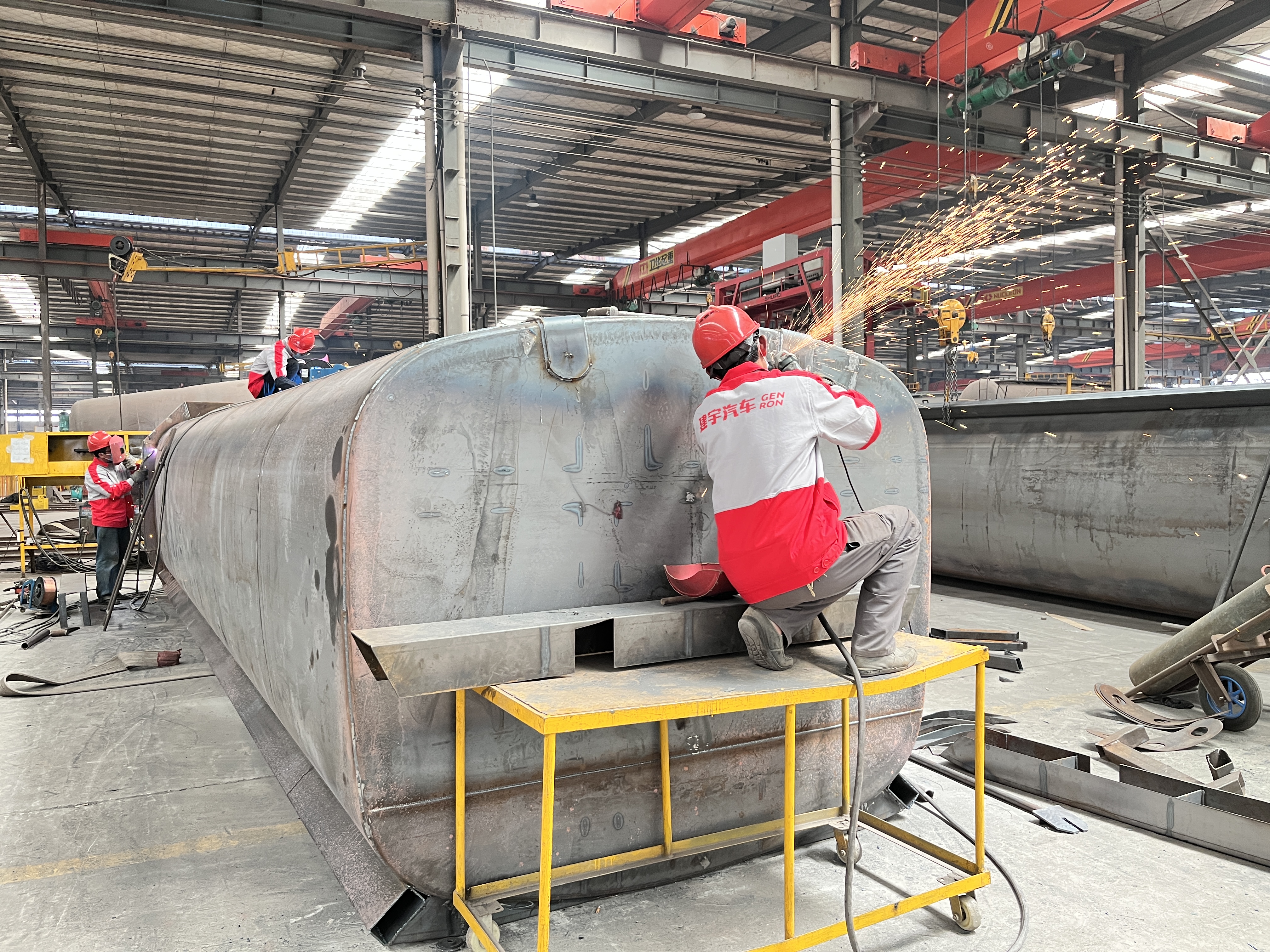
OEM/ODM customization covers logo, color, material, and shape before a fleet order is released to production.

China Compulsory Certificate 2020091101023320, issued by China Automotive Certification Center Co., Ltd., scope Special Vehicles, valid to 9 December 2030.
Have Questions or Need More Details?
Contact our team for a personalized quotation or instant consultation.
Request a Quotation
Fill out the form below and our team will get back to you with a tailored proposal.
WhatsApp Direct Chat
Prefer to chat in real-time? Message us on WhatsApp for instant assistance & quick answers.
- Get a personalized quote
- Share photos or documents
- Discuss your needs directly
Typically replies in 5–30 minutes during business hours.