
Heavy Duty Truck Cab Guide: Cd 0.53, ECE-R29 & Cab Types
Heavy Duty Truck Cab Guide: Cd 0.53, ECE-R29 & Cab Types

Cab geometry, roof type and aerodynamic configuration are selection parameters that can be verified on the specification sheet before ordering.
A heavy duty truck cab is a buying decision with two measurable outputs: how much fuel the vehicle burns at highway speed, and how well the occupants are protected in an impact. The cab configuration described in this guide is specified with a drag coefficient of Cd = 0.53, approximately 18% lower than the mainstream benchmark used for comparison, and the cabs delivered on the reference fleet project are ECE-R29 safety certified. Both are checkable before a purchase order is issued — and both are usually missing from the single cab: flat roof line in a quotation.
This guide is written for importers, distributors, fleet owners and procurement engineers in Africa and Southeast Asia who currently evaluate trucks on engine output, gearbox and body volume. It explains cab specifications as selection parameters for fuel efficiency and safety, using two models supplied by SHANDONG WONDERFUL AUTO COMPANY LIMITED. as worked examples: the SHACMAN F3000 6x4 tractor truck with a medium-length flat roof cab, and the SHACMAN X3000 6x4 dump truck (SX3258W384C) with a long flat roof cab.
What a cab specification actually contains
A cab specification is not a comfort list. In procurement terms it consists of five verifiable blocks:
- Cab length and roof type — medium-length flat roof, long flat roof or high roof, and whether a top guide cover is fitted.
- Cab mounting and suspension — how the cab is isolated from chassis vibration and road shock.
- Aerodynamic configuration — the drag coefficient of the cab-and-body combination, plus mirrors, roof equipment and the cab-to-body gap.
- Structural safety certification — typically ECE-R29 for the cab of a heavy commercial vehicle.
- Driver environment equipment — seat type, climate control, mirrors, power supply, telematics readiness and locking.
Each block maps onto a commercial outcome. Aerodynamics maps to fuel cost on long haul heavy duty truck routes. Certification maps to registration, insurance and operator acceptance. The equipment list maps to driver retention, night-shift safety and retrofit cost. Cab mounting maps to repair frequency on unpaved roads.
Why the cab is the first specification dropped in evaluation
Most evaluation sheets are built around driveline and payload, because those are the numbers that are easy to compare: horsepower, gearbox model, axle ratio, body volume. The cab line is usually filled in last, and often as a single word.
The commercial consequences of that shortcut are predictable:
- Two trucks with identical engines are quoted at different fuel costs, because the cab-and-body aerodynamics differ.
- A vehicle arrives with a cab configuration that does not match the certification document the buyer assumed applied.
- Drivers reject the truck on long shifts because the seat, air conditioning or storage does not fit the operating pattern — a common issue where vehicles run 24/7.
- Cab parts that are cheap in one market are slow to arrive in another, converting a minor collision into weeks of downtime.
In Africa, the same truck may run highway, unpaved road and steep slope conditions within a single project, and it may be expected to keep doing so for years. The cab decision therefore has to be made with the duty cycle in hand, not after delivery.
Industry background: why cab specification is moving up the agenda
The heavy-duty truck market is large and still expanding. Global Market Insights estimates the global heavy-duty trucks market at USD 308.3 billion in 2025, projected to reach USD 475.5 billion by 2035. China's export machine is a major part of that supply: the China Association of Automobile Manufacturers reports that China's heavy-duty truck exports reached 276,000 units in 2023, a 58% year-on-year increase, and rose to 295,000 units in 2024. In the first half of 2024 alone, China's total truck exports reached 351,000 units, with roughly one out of every three heavy trucks seen overseas originating from China.
Two forces are pushing cab specification into the buying conversation:
- Regulatory pressure on emissions and safety. The US EPA finalized its Phase 3 greenhouse gas standards for heavy-duty vehicles starting in model year 2027, calling for an approximately 80% reduction in NOx. Tightening rules eventually reach cab electronics, cooling, aerodynamic treatment and documentation.
- Electrification of part of the fleet. Fortune Business Insights projects the global electric heavy-duty truck market growing from USD 14.84 billion in 2026 to USD 101.02 billion by 2034, and S&P Global Ratings forecasts electric heavy-duty truck penetration in China to exceed 20% in 2026. Electric drivetrains change the powertrain, not the physics of the cab: drag, structure and driver environment still decide efficiency and safety.
For buyers in Africa and Southeast Asia, the practical translation is narrower. Diesel heavy duty trucks remain the working fleet, parts networks still determine lifecycle cost, and the cab is where compliance documents and driver productivity are won or lost.
Parameter 1: drag coefficient (Cd) and fuel efficiency
The drag coefficient (Cd) is a dimensionless number describing how much aerodynamic resistance a shape produces as air moves around it. A lower Cd means less energy is spent pushing the vehicle through the air. For heavy duty trucks, aerodynamic resistance rises with speed, so Cd matters far more on a highway run at 80 km/h than on a haul road cycle at low average speed.
In the cab configuration described here, the specified drag coefficient is Cd = 0.53, approximately 18% lower than the mainstream benchmark used for comparison. For a long haul heavy duty truck or an articulated heavy duty truck pulling a semi-trailer on highway routes, a lower Cd translates directly into a smaller fuel bill per kilometre and a longer range per tank. On a construction heavy duty truck working a short, steep, unpaved cycle, the same improvement is measurable but small, because average speed is low.
Where drag is actually created on a working truck:
- Frontal area — determined largely by cab height and roof type.
- The gap between cab and body or trailer — a known source of turbulence that no cab alone can fix.
- Mirrors, sun visors and roof equipment — small parts with a disproportionate effect on such a large frontal area.
- Guide covers and fairings — the fitted panels that guide air over the cab-to-body step.
Parameter 2: ECE-R29 cab strength certification
ECE-R29 is the UNECE regulation that sets minimum structural strength requirements for the cab of a heavy commercial vehicle. It addresses frontal impact, roof strength and rear wall strength — the load cases where the cab is the only protection between the driver and the impact. Buyers ask for it for three reasons: vehicle registration and customs clearance in regulated markets, insurance terms, and internal fleet safety policy.
The important nuance is that certification attaches to the cab structure and its build, not to a model name on a brochure. The certificate a buyer needs is the one that matches the cab type, roof configuration and drive hand actually ordered.
Evidence from a delivered project: an 18-unit fleet operated by a heavy-duty commercial vehicle OEM client in Ghana, used for transportation work, is recorded with ECE-R29 safety certified cabs, and those vehicles have achieved reliable, stable operation over a 15-year duration. The same project record highlights a mature Weichai-Fast-Hande powertrain for climbing performance on mountainous terrain, a reinforced chassis for high-temperature and rough road conditions, optimized fuel efficiency to reduce fleet operating costs, ample spare parts supply in Africa and Southeast Asia, and low maintenance cost.
On the X3000, cab protection is supported by four-point hydraulic suspension, which isolates the cab structure from chassis shock — relevant both to comfort and to the long-term integrity of the cab mounts on unpaved roads.
Parameter 3: cab types — medium-length flat roof vs long flat roof
Cab type changes interior space, vehicle height, weight distribution and the amount of aerodynamic work left to the buyer.
Medium-length flat roof cab — SHACMAN F3000
The F3000 is a 6x4 tractor truck specified with a medium-length flat roof cab without a top guide cover. Its driveline is a WP10.340E22 engine at 340 HP on Euro II emission, matched to a 10JSD180-Iron Shell-QH 50 gearbox. The configuration suits regional haul and on-off road tractor work, where a shorter cab keeps the vehicle compact and lower, and where the truck is expected to pull flatbed, lowbed, sidewall, fence, dump or tanker semi-trailers rather than run continuous long-distance highway cycles.
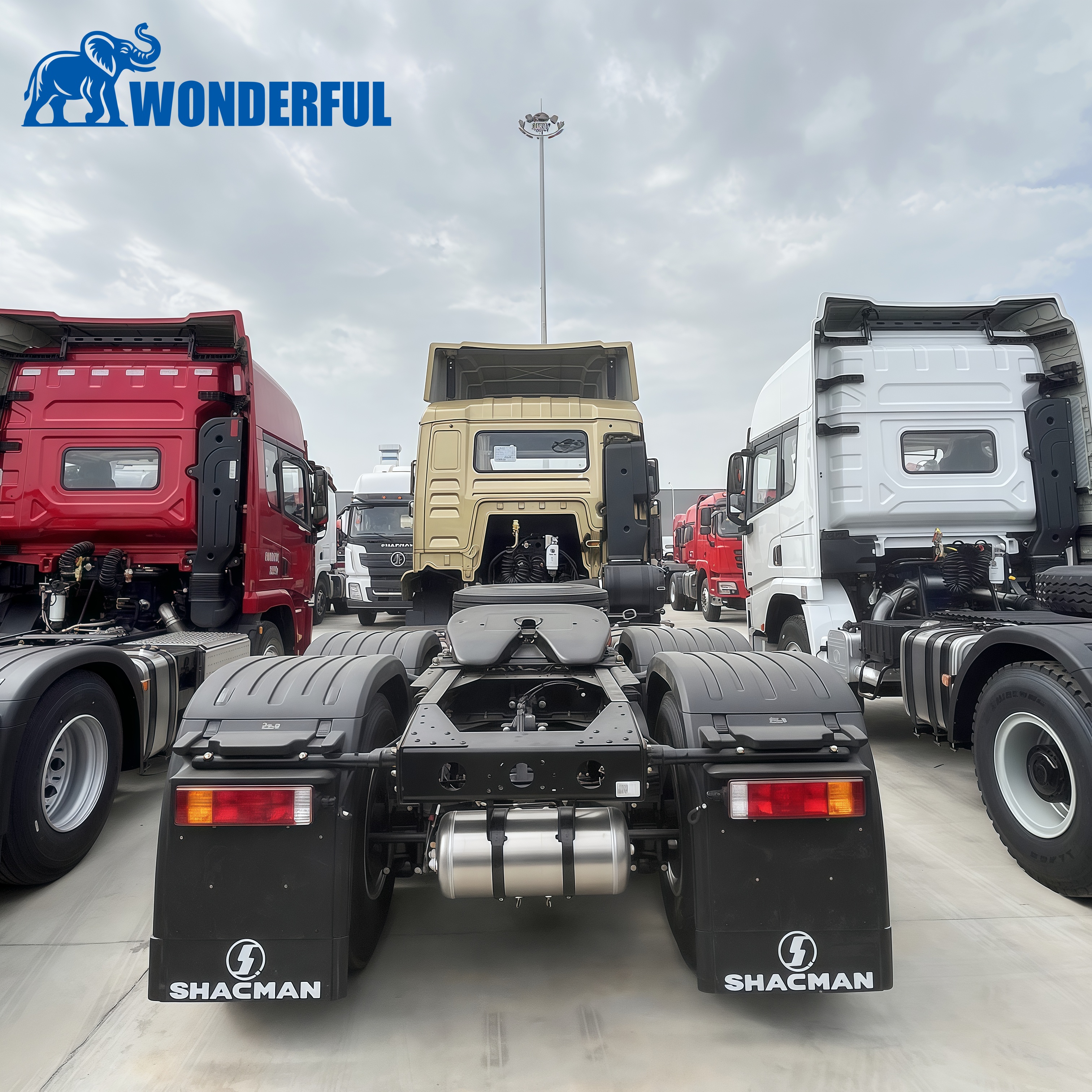
SHACMAN F3000: 6x4 tractor truck with a medium-length flat roof cab without top guide cover, specified for regional and on-off road haulage.
Long flat roof cab — SHACMAN X3000
The X3000 dump truck carries model code SX3258W384C, with left-hand drive, 6x4 drive configuration, a 3775+1400 mm wheelbase, an overall dimension of 8500x2600x3400 mm and a maximum speed of 82 km/h. Its cab is a long flat roof cab without guide cover, mounted on four-point hydraulic suspension.
The longer cab buys interior space — relevant where a truck works long shifts, and where the driver environment affects retention. The trade-off is vehicle height and a larger frontal area, which is why the fairing and body integration decision matters more on this configuration when it is used for highway work.
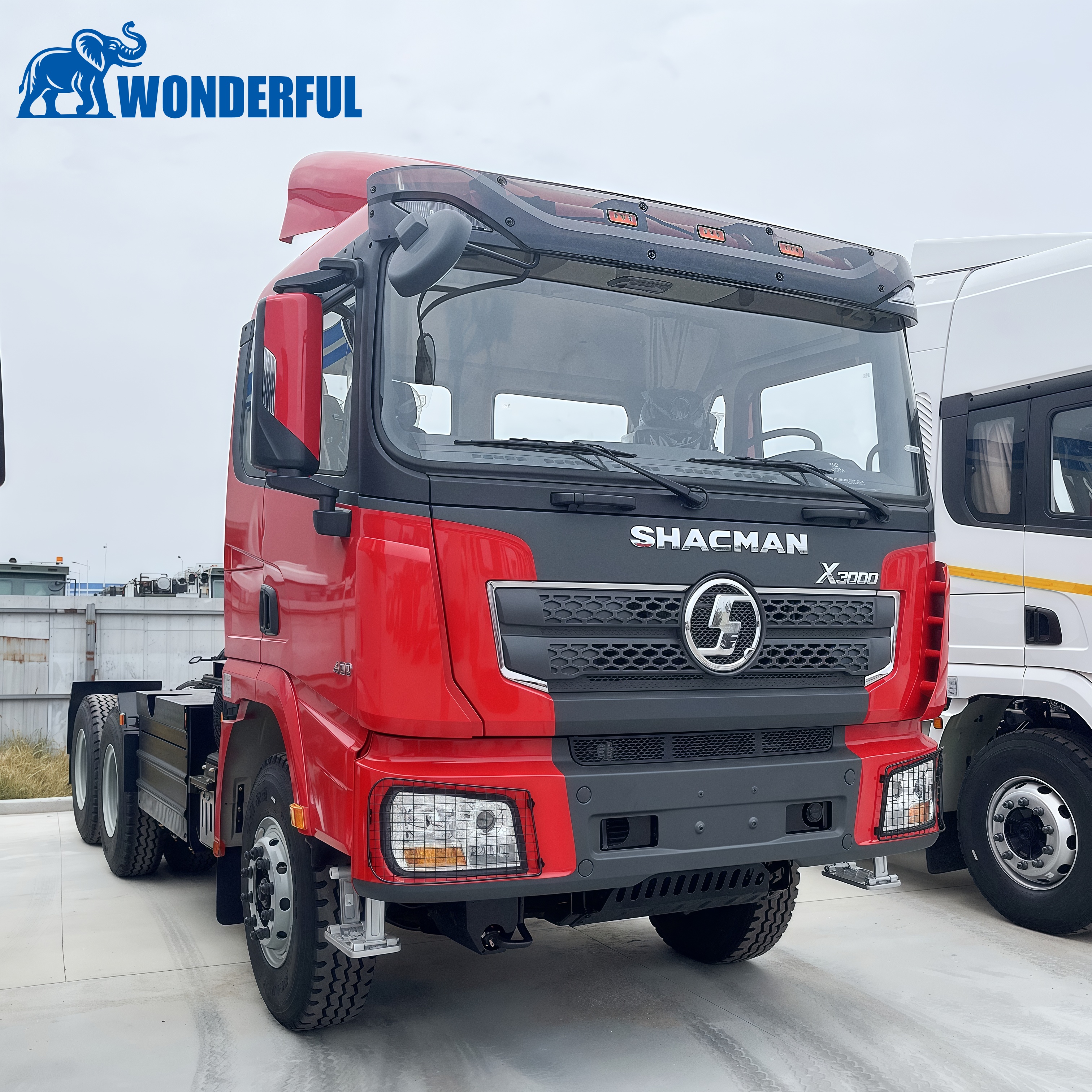
SHACMAN X3000: long flat roof cab without guide cover, mounted on four-point hydraulic suspension to reduce vibration and road shock.
How to choose between them
- Choose the medium-length flat roof cab when the truck works mixed or regional routes, needs a low overall height, or runs as a tractor unit across several trailer types.
- Choose the long flat roof cab when the vehicle is a construction or mining dump unit with high in-cab hours, or when the operator needs more space and a longer working life under 24/7 duty.
- Do not treat the cab as fixed after the model is chosen: roof type, guide cover, drive hand and equipment list are configuration decisions that should be written into the order.
The driver environment is a specification, not a trim level
Driver-facing equipment converts directly into uptime. The X3000 cab specification includes:
- Air suspension main driver seat and auxiliary passenger seat.
- Automatic constant temperature air conditioner — a working requirement in high-temperature markets, not a luxury.
- Electric heated rearview mirror and electric control window with manual flip.
- Multi-function steering wheel with cruise control.
- 300 W inverter power, useful for driver devices and aftermarket equipment.
- Central lock with double remote control and two mechanical keys.
- Metal front bumper, three foot pedals, reversing buzzer, headlight protective grille, taillights, daytime running lights and sunshade lights, and a 2 kg fire extinguisher.
- SHACMAN telematics display screen (supplied without terminal), which allows a fleet to fit its own tracking hardware.
- 180 Ah maintenance-free battery and an aluminium alloy reservoir.
Read as a procurement list, these items answer four questions: can the driver work safely at night, can the driver stay in the seat through a long shift, can the fleet add telematics without rewiring, and how much of this would have to be retrofitted locally if it were missing? Each missing line is a local purchase, a warranty question and a delay.
Spare parts, drive hand and cab repair economics
A cab is repairable, and repair economics decide lifecycle cost more than the purchase price. The reference project record for Africa notes ECE-R29 safety certified wide-body cabs, left-hand and right-hand drive options, and various optional kits for semi-trailer transport, with ample spare parts supply in Africa and Southeast Asia and correspondingly low maintenance cost.
Supply capability behind those vehicles, as specified by the supplier, includes OEM, ODM, CKD and SKD production modes; customization of logo, colour, material and shape; a monthly capacity of 500 units; a lead time of 30-45 days; a minimum order quantity of 1 unit; 100% testing of every unit; a 1-year warranty; and export markets covering Africa and Southeast Asia.
Two of those lines matter more than they appear in a cab discussion. CKD and SKD shipping allow cabs and components to move in a more compact form, which reduces freight exposure for importers. A minimum order quantity of 1 unit allows a single vehicle to be validated in the real duty cycle before a fleet order is placed.

Units pass 100% testing before shipment; stated production capacity is 500 units per month, with a 30-45 day lead time.
Step-by-step: evaluating cab specifications before you order
- Write the duty cycle first. Record average and maximum speed, road surface, gradient, payload and daily operating hours. Cab priorities follow from this: highway hours justify aerodynamic configuration, unpaved and steep slope conditions justify cab mounting and structure.
- Decide cab length and roof type. Medium-length flat roof for compact regional tractor work; long flat roof where in-cab hours and driver space matter.
- Decide the aerodynamic package. Confirm whether the cab is supplied with or without a top guide cover, and who is responsible for the fairing or body integration on long-haul work.
- Verify ECE-R29 documentation against the ordered cab. Match the certificate to cab type, roof configuration and drive hand — not to the model name alone.
- Audit the equipment list line by line. Seats, climate control, mirrors, lighting, inverter, locking and telematics readiness should all appear in the quotation, not in a verbal promise.
- Check parts, drive hand and shipping format. Confirm left- or right-hand drive, the spare parts route for your country, the shipping format (CKD, SKD or fully assembled), MOQ and lead time in writing.
Use cases: matching cab configuration to project conditions
Construction and mining haulage — dump heavy duty truck
The X3000 6x4 dump truck carries a 5600x2300x1400 mm cargo body with an 8 mm floor and 6 mm side panels, a 180 front lift cylinder, a Cummins ISM11E5 440 engine at 324 kW / 440 HP on EURO 5 with 10.8 L displacement, a 12JSD200T-B transmission with QH50 and FHB400 hydraulic retarder, and a rear axle ratio of 5.262. In this duty, low-speed climbing and body durability dominate, and the long flat roof cab is chosen for driver hours rather than for aerodynamics.
A second configuration in the same duty class is the SINOTRUK 6x4 dump truck ZZ3257N384GB1R: WD615.47 engine at 371 HP, HW19710 gearbox with HW50 direct-connection power take-off unit, VGD95 front axle with drum brake, MCP16ZG dual rear axles at a 5.45 ratio, a 5600x2300x1500 mm body with an 8 mm floor and 6 mm sides in manganese Q355 steel, a double-layer 8+8/300 frame and reinforced multi-leaf springs front and rear — built for high wear resistance on poor road surfaces.
Long haul and articulated work — long haul heavy duty truck
For highway tractor and articulated heavy duty truck operations, cab aerodynamics and driver environment are the two cab lines that pay back. A lower drag coefficient such as Cd = 0.53 reduces fuel consumption across every kilometre of the contract, and the equipment list determines whether the fleet can retain drivers on multi-day cycles.
Mixed 24/7 fleet operations
Fleets running continuous operation across port logistics, bulk cargo and agricultural transport need one cab configuration that survives several duty types. Here, cab mounting, parts availability and a documented warranty matter more than a marginal aerodynamic gain. The application conditions these vehicles are specified for — heavy load, highway, unpaved road and steep slope — are exactly the conditions that separate a longer-lasting cab from a cheaper one.
Refrigerated and cargo distribution
Where a cargo heavy duty truck or refrigerated heavy duty truck works fixed urban and intercity routes, the priorities shift again: driver comfort and visibility for frequent stops, a reliable power supply for auxiliary equipment, and a parts route that keeps the vehicle out of the workshop.
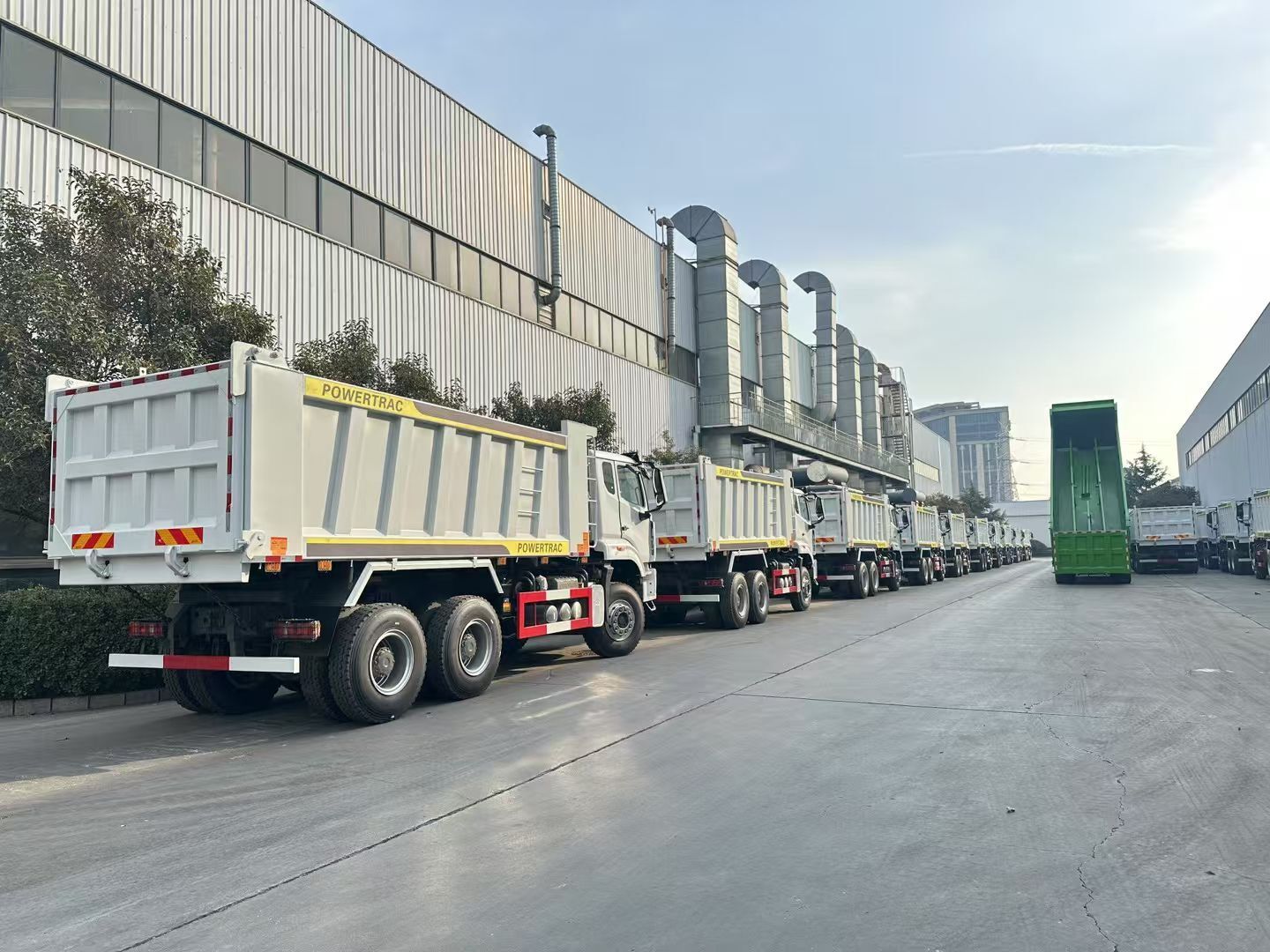
Dump heavy duty trucks are specified for heavy load, unpaved road and steep slope conditions across mining, road construction and infrastructure projects.
Comparison table: cab and vehicle specification
| Specification | SHACMAN F3000 | SHACMAN X3000 (SX3258W384C) |
|---|---|---|
| Vehicle type | Tractor truck | Dump truck |
| Drive configuration | 6x4 | 6x4 |
| Cab type | Medium-length flat roof cab, no top guide cover | Long flat roof cab, no guide cover |
| Cab mounting | Not listed in the specification sheet used for this comparison | 4-point hydraulic suspension |
| Driver seat | Not listed in the specification sheet used for this comparison | Air suspension main driver seat; auxiliary passenger seat |
| Climate control | Not listed in the specification sheet used for this comparison | Automatic constant temperature air conditioner |
| Mirrors and windows | Not listed in the specification sheet used for this comparison | Electric heated rearview mirror; electric control window with manual flip |
| In-cab power | Not listed in the specification sheet used for this comparison | 300 W inverter; 180 Ah maintenance-free battery |
| Engine | WP10.340E22, 340 HP | CUMMINS ISM11E5 440 (JACOB), 324 kW / 440 HP, 10.8 L |
| Emission standard | Euro II | EURO 5 |
| Transmission | 10JSD180-Iron Shell-QH 50 | 12JSD200T-B + QH50 + FHB400 hydraulic retarder |
| Fuel tank | Not listed in the specification sheet used for this comparison | 400 L aluminium alloy |
| Configuration role | Tractor unit for semi-trailer combinations | Dump unit for construction, mining and heavy haul cycles |
Both models are supplied by SHANDONG WONDERFUL AUTO COMPANY LIMITED. Specifications above follow the supplier's published product sheets; confirm the final configuration at quotation stage.
FAQ: heavy duty truck cab specifications
Are the cabs on these trucks certified to ECE-R29?
ECE-R29 applies to the cab structure, so the certificate must match the cab type, roof configuration and drive hand you actually order; it does not transfer automatically from a model name. In the reference project record used in this guide, an 18-unit transportation fleet operated by a heavy-duty commercial vehicle OEM client in Ghana is described with ECE-R29 safety certified cabs, and those units have achieved reliable, stable operation over a 15-year duration. Ask for the ECE-R29 documentation that corresponds to your ordered cab before confirming the order.
Can the cab be configured for right-hand drive markets and custom requirements?
Left-hand drive and right-hand drive options are both available, along with various optional kits for semi-trailer transport. Customization covers logo, colour, material and shape, and production modes include OEM, ODM, CKD and SKD, so a cab and its trailer kits can be delivered fully assembled or in knock-down form. Stated capacity is 500 units per month, every unit is 100% tested, and export markets are Africa and Southeast Asia. A 1-year warranty applies to the vehicles supplied.
What drives the cost of a cab specification?
Cab cost is configuration-driven, so no single figure applies: cab type and roof, the aerodynamic package, the equipment list such as air suspension seats, automatic constant temperature air conditioning and inverter power, drive hand, and the shipping format all move the number. Over the service life, the larger cost driver is parts availability — which is why ample spare parts supply in Africa and Southeast Asia, low maintenance cost and a documented warranty are treated as part of the cab decision rather than after-sales paperwork.
Can a single unit be ordered to validate the cab before a fleet order?
Yes. The minimum order quantity is 1 unit and the lead time is 30-45 days, so a single vehicle can be run on the real duty cycle — highway, unpaved road, steep slope or continuous operation — before a fleet commitment is made. Validating cab configuration, cab suspension and the driver environment on one unit is the most reliable way to confirm a specification that will be repeated across a fleet.
What is the lead time, and how are spare parts handled after delivery?
Lead time is 30-45 days, with stated production capacity of 500 units per month. Spare parts are supplied through the Africa and Southeast Asia markets where these vehicles are exported, which keeps cab repair and scheduled maintenance within a normal parts cycle rather than a long import lead time. To move from specification to a real quotation, contact Coffey at Coffey@wonderful-autos.com or +8615020072752 (WhatsApp available on the same number), or download the Wonderful Auto product brochure for the full model and configuration list.
Conclusion: treat the cab as three checkable numbers
Cab specification stops being a subjective topic once it is reduced to three checkable items: the aerodynamic configuration and its drag coefficient, the ECE-R29 certification that matches the ordered cab, and the cab type that fits the duty cycle — medium-length flat roof for compact regional tractor work, long flat roof where driver hours and space matter. Everything else in the cab, from air suspension seats to the telematics-ready screen and the 300 W inverter, is a line item that should be visible on the quotation.
SHANDONG WONDERFUL AUTO COMPANY LIMITED. supplies heavy duty trucks, semi-trailers and trailer parts to Africa and Southeast Asia, with OEM, ODM, CKD and SKD production, customization across logo, colour, material and shape, a 1-unit minimum order quantity, a 30-45 day lead time, 100% testing and a 1-year warranty. Models such as the SHACMAN F3000 and SHACMAN X3000 illustrate the two cab configurations discussed here.
Next step: request a cab specification sheet and quotation matched to your duty cycle.
Contact: Coffey — Coffey@wonderful-autos.com | Tel / WhatsApp: +8615020072752
Website: wonderful-autos.com | Catalogue: Download the Wonderful Auto PDF brochure
Address: Room 1301, Building 1, No.8 Zhilidao Road, High-Tech Zone, Qingdao, Shandong

Export shipments to Africa and Southeast Asia, supported by spare parts supply in both markets.
Have Questions or Need More Details?
Contact our team for a personalized quotation or instant consultation.
Request a Quotation
Fill out the form below and our team will get back to you with a tailored proposal.
WhatsApp Direct Chat
Prefer to chat in real-time? Message us on WhatsApp for instant assistance & quick answers.
- Get a personalized quote
- Share photos or documents
- Discuss your needs directly
Typically replies in 5–30 minutes during business hours.