
Heavy Duty Truck Gearbox and PTO Specs: A Technical Selection Guide

Cover: drivetrain assembly stage. Gearbox class, transmission variant and PTO mounting provisions are fixed before a dump heavy duty truck build is released. Image: SHANDONG WONDERFUL AUTO COMPANY LIMITED.
Specifying a heavy duty truck gearbox and its power take-off (PTO) is one decision, not two. On a dump heavy duty truck, the manual gearbox sets the torque class the drivetrain can accept and the ratio steps the engine works through, while the PTO decides how much engine power can be diverted to the hydraulic pump that lifts a loaded body. Choose the two independently and the truck will shift constantly on grade, lift slowly, run hot, or wear its clutch early.
This guide explains what the 10JSD180 manual gearbox, the 12JSD200T-B transmission and the HW50 PTO each do inside a dump truck drivetrain, using SHACMAN X3000 and SINOTRUK-based platforms as reference points in the selection conversation. It then sets out a specification workflow, a comparison of documented performance figures, and a written verification checklist that buyers can apply to any supplier, including SHANDONG WONDERFUL AUTO COMPANY LIMITED., a Qingdao-based heavy duty truck and semi-trailer manufacturer that exports its full production output.
How to read the model codes in this article: 10JSD180, 12JSD200T-B and HW50 are product family designations. They identify which component family is being discussed; they are not a specification by themselves. Rated input torque, ratio lists, PTO ratio, mounting position and direction of rotation must come from the current OEM datasheet for the exact build and should never be inferred from the code. Every performance figure quoted below is a verified first-party or third-party figure, and its origin is identified where it appears.
Problem Definition: Four Drivetrain Mismatches That Surface in Service
Drivetrain problems on dump trucks are rarely catastrophic failures. They are mismatches the truck learns to live with: a slow lift, a gearbox that hunts on a ramp, a clutch replaced twice as often as the fleet planned. Four of them account for most of the complaints.
1. Torque class mismatch between engine and gearbox. A transmission should be selected against the engine's peak torque, not against a general reputation for being heavy duty. In a Weichai WP12/WP13 configuration, the documented peak torque is 2,060 N·m delivered at 1,000 rpm, with a wide torque band that keeps the engine pulling without constant downshifts. A gearbox whose rated input torque sits at or below that figure with no documented engineering margin is the first component to show wear on repeated loaded starts on a ramp. Ask for the gearbox rated input torque in writing and compare it directly with the engine peak torque figure.
2. Ratio spread mismatch for the haul route. A construction heavy duty truck working a quarry ramp spends most of its loaded time inside a narrow band of gears. The documented climbing performance of this configuration is a maximum climbing gradient of ≥20% under full load, approximately 15% stronger climbing power than competitors, and fewer gear shifts on long uphill roads. When ratio steps are too wide, the driver hunts between gears, the clutch absorbs the difference at every loaded start, and fuel consumption rises, working directly against the 8%–12% fuel consumption advantage (2.5–3.8 liters saved per 100 km versus peer competitors under mixed mountain and highway conditions) that the same drivetrain is designed to deliver.
3. PTO and hydraulic pump mismatch. The PTO draws torque from the transmission and drives the pump that raises the body. If PTO ratio, pump displacement and the engine's working rpm band are not agreed as a set, the visible result is a slow lift that costs cycle time on every load, or a pump that cannot reach working pressure at all. Lift time in seconds, not a statement that a PTO is fitted, is the number to specify.
4. Thermal and structural limits under continuous duty. Dump work is a low-speed, high-load cycle that punishes cooling and frame stiffness as much as it punishes the gearbox. Documented figures for this class of truck include a cooling area enlarged by 15% with engine overheating failure rate reduced by 30% in hot tropical regions, and an 8+7 mm double-layer thickened high-strength torsion-resistant frame with 22% improved anti-torsion performance on bumpy heavy-load roads.
One further specification thread belongs in the same conversation. Drivetrain and body choices change how a loaded truck behaves on a haul road, and the manufacturer documents collision risks including rear-end, blind-spot and rollover accidents, managed through ADAS automatic braking and blind-spot detection, with ESC and safe following-distance practice. Treating those controls as part of the drivetrain specification, rather than an aftermarket addition, keeps the configuration consistent from the build sheet onward.
Industry Background: What Today's Heavy Truck Market Means for Drivetrain Specification
Buyers specifying a gearbox and PTO are working inside a market that is both large and unusually concentrated at the top. Global heavy-duty truck market size was estimated at USD 308.3 billion in 2025 and is projected to reach USD 475.5 billion by 2035 (Global Market Insights). Scope matters when those figures are used in a business case: other estimates for the same market range from USD 212.4 billion to USD 234.1 billion, depending on whether the definition covers Class 4–8 or Class 8 only. Define the scope before quoting a market number in a procurement document.
Supply has shifted accordingly. China's heavy-duty truck exports reached 276,000 units in 2023, a 58% year-on-year increase, and rose to 295,000 units in 2024 (Shacman industry report / CAAM). In the first half of 2024, China's total truck exports reached 351,000 units, with one out of every three heavy trucks seen overseas originating from China (CAAM). For fleets buying dump or construction trucks in Africa, the Middle East, Southeast Asia or Latin America, the drivetrain families discussed in this guide are now part of the mainstream option set rather than a niche choice.
At the top of the market, Daimler Truck led globally with a share of over 12% in 2025, and the top five players — Daimler, PACCAR, Sinotruk, TRATON and Volvo — held 32% collectively (Global Market Insights). The practical consequence for specification work is that the same transmission and PTO families are discussed across several cab and chassis platforms, so a platform name or a model code tells a buyer very little about the finished truck. The build sheet does.
Electrification and emissions rules are the two forces reshaping that build sheet. The global electric heavy-duty truck market is projected to grow from USD 14.84 billion in 2026 to USD 101.02 billion by 2034 (Fortune Business Insights), and heavy-duty electric truck penetration in China is forecast to exceed 20% in 2026, driven by subsidy-led replacement and charging infrastructure growth (S&P Global Ratings). A battery-electric chassis normally supplies auxiliary hydraulics from a dedicated electric drive rather than a transmission-mounted PTO, so a dump body specification does not transfer unchanged from a diesel chassis to an electric one. On the diesel side, the US EPA finalized the Phase 3 greenhouse gas standards for heavy-duty vehicles starting in model year 2027, requiring roughly an 80% reduction in NOx — a reminder that engine, aftertreatment and gearbox have to be selected as one compliant package for the destination market rather than as separate line items.
Detailed Solution: How the 10JSD180 Gearbox, the 12JSD200T-B Transmission and the HW50 PTO Work Together
Three components, one mechanical chain: engine, gearbox with the PTO mounted on it, then driveline and axles, with the PTO branching off to drive the hydraulic pump. Each link has its own selection variables, but they only work when they are chosen against the same duty cycle.
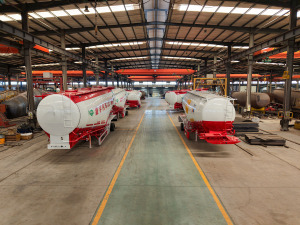
Drivetrain assembly: transmission, PTO aperture and hydraulic connections are matched to the same build sheet before the cab and body are fitted.
The 10JSD180 manual gearbox: torque multiplication and usable gear steps
A manual transmission converts the engine's relatively narrow efficient rpm band into usable wheel torque through a fixed set of ratios. On a dump heavy duty truck the job is demanding in two places: the loaded start under a loading shovel, and the climb out of the pit or quarry with a full body. The 10JSD180 is one of the manual gearbox designations referenced in this drivetrain class, and it is the component that determines how much torque the rest of the drivetrain is allowed to receive.
What a buyer should obtain in writing for this component:
- rated input torque, to be compared against the engine peak torque figure (2,060 N·m at 1,000 rpm on the WP12/WP13 configuration referenced here);
- the complete forward and reverse ratio list, plus the top-gear ratio;
- PTO mounting provisions: the aperture on the gearbox, its position (side or rear) and the maximum torque the PTO drive can transmit;
- lubrication arrangement and oil capacity, and how the transmission is lubricated during prolonged stationary PTO operation;
- spare parts availability and service familiarity in the destination market.
The last point matters more than it appears. Manual gearboxes continue to be specified for construction and mining fleets in export markets largely because they can be maintained with widely available skills and parts — an advantage that disappears if the specific variant is not supported locally.
The 12JSD200T-B transmission: when the heavier variant earns its cost
Where payload, gradient and gross combination weight push a configuration beyond what a lighter manual gearbox handles comfortably, the conversation moves to a heavier family such as the 12JSD200T-B transmission. Two differences matter in practice: a higher torque class provides margin against engine peak torque, and a larger number of ratio steps typically produces smaller gaps between gears, which helps hold momentum on a long loaded climb — the condition where the documented configuration already shows a maximum climbing gradient of ≥20% under full load, roughly 15% stronger climbing power than competitors, and fewer gear changes on long uphill roads.
The discipline here is simple and frequently ignored: a model code is not a rating. Do not assume that the numbers inside a designation such as 12JSD200T-B describe torque capacity, and do not compare two suppliers by comparing their codes. Request the documented rated input torque, the ratio table, the mass, the oil capacity and the PTO provisions for the specific production version, then compare those values.
The heavier variant is not automatically the better purchase. On predominantly highway operation — container haulage, long haul heavy duty truck duty, cross-border freight — the incremental cost and mass of a higher torque class is harder to justify than on severe construction duty. The documented configuration in this class is designed for long-haul semi-trailer container transport, heavy-duty bulk cargo transport in mountainous areas and cross-border freight transport, and it achieves 8%–12% lower fuel consumption than peer competitors, saving 2.5–3.8 liters per 100 km under mixed mountain and highway conditions.
The HW50 PTO: from transmission to hydraulic pump
The HW50 PTO is a gear-driven power take-off that draws torque from the transmission to run the auxiliary the job requires — on a dump truck, the hydraulic pump feeding the lift cylinder. It is a small component with an outsized effect on productivity, because lift time and system reliability are set at the interface between the PTO, the pump and the transmission.
Six variables must be agreed as a set rather than negotiated one by one:
- Mounting position and aperture compatibility with the selected gearbox.
- PTO ratio — the relationship between transmission input speed and PTO output speed.
- Output flange and spline, matched to the pump coupling.
- Direction of rotation, which must match the pump design.
- Engagement method — mechanical, pneumatic or electric — and whether engagement is possible with the vehicle stationary and the engine running, which is the normal condition for tipping.
- Duty rating and lubrication for the intended cycle, including oil supply during long stationary operation and cooling in high ambient temperatures. The documented cooling package on this manufacturer's configuration enlarges cooling area by 15% and reduces engine overheating failure rate by 30% in hot tropical regions.
On the hydraulic side, pump displacement multiplied by PTO ratio and the engine's working rpm band produces the theoretical flow, and flow sets lift time. Relief valve setting, cylinder sizing and body weight must be matched to that flow and pressure, while reservoir volume and oil cooling must suit the ambient temperature of the destination market. Fix the lift time target first, and let PTO ratio and pump displacement follow from it.
SHACMAN X3000 and SINOTRUK: reference points, not specifications
SHACMAN X3000 and SINOTRUK-based trucks are widely used as comparison anchors when fleets benchmark cab, chassis and axle practice, and they are useful for that purpose. They do not, however, define the drivetrain. Two trucks carrying the same platform name can arrive with different gearbox variants, different PTO ratios and different axle ratios, because those items are set on the build sheet at order stage.
The practical rule for buyers: compare build sheets, not platform names. A quotation should state the gearbox model and rated input torque, the PTO model with ratio and engagement type, the pump displacement and relief setting, the axle ratio and the body volume — in writing, on one page.
Step-by-Step Breakdown: Specifying a Gearbox and PTO Combination
Eight steps, in order. Most drivetrain mismatches are created by starting at step three.
Step 1 — Define the duty cycle before the hardware. Loaded distance, steepest sustained gradient, daily cycles, hours of PTO operation per day, ambient temperature, road surface and dust. Every downstream choice is calibrated against this description.
Step 2 — Fix engine output in writing. Record peak torque and the rpm at which it is delivered. On the WP12/WP13 configuration referenced here, that is 2,060 N·m at 1,000 rpm, with a wide torque band and a maximum climbing gradient of ≥20% under full load.
Step 3 — Choose the gearbox torque class with a documented margin. Compare rated input torque against peak engine torque and record the margin on the build sheet. A margin that exists only in conversation does not protect the clutch.
Step 4 — Choose the ratio spread against the route, not the datasheet. Confirm that the top ratio lets the engine sit in its efficient band at target highway speed, and that the lowest ratios stay usable on the steepest loaded ramp.
Step 5 — Define exactly what the PTO must drive. Dump pump, tipper, crane, winch, mixer or refrigeration drive, and whether it runs continuously or intermittently, stationary or while moving. A PTO sized for a tipper pump is not automatically correct for a winch or a refrigeration compressor.
Step 6 — Match PTO ratio, pump displacement and lift time. Set a lift time target in seconds, then confirm the pump displacement, PTO ratio and working rpm band that achieve it, together with relief pressure, cylinder sizing and reservoir capacity.
Step 7 — Verify thermal and structural margin for the destination climate. Documented figures in this class: cooling area enlarged by 15% with engine overheating failure rate reduced by 30% in hot tropical regions, and an 8+7 mm double-layer thickened high-strength torsion-resistant frame with 22% improved anti-torsion performance on bumpy heavy-load roads.
Step 8 — Close the documentation loop. One signed build sheet listing engine model and torque curve, gearbox model and rated input torque, full ratio list, PTO model with mounting position, ratio, rotation and engagement type, pump displacement and relief setting, axle ratio, body volume, safety systems, warranty terms and the spare parts list.

Verification stage: the gearbox, PTO and hydraulic package are checked against the approved specification before the truck moves to body fitting.
Use Cases: Matching the Drivetrain to the Job
Construction heavy duty truck (quarry and aggregate haul). This is the most demanding PTO duty, with repeated loaded starts on ramps and high ambient dust. Specify torque margin, lowest-ratio usability and thermal margin, and set the lift time target against the number of cycles per shift rather than peak capability alone.
Long haul heavy duty truck and articulated heavy duty truck. Tractor-trailer duty rarely uses the PTO, so priority shifts to ratio spread and cruising efficiency. Documented benchmarks for this configuration: 8%–12% lower fuel consumption than peer competitors, 2.5–3.8 liters saved per 100 km, 12% lower maintenance frequency under harsh heavy-duty conditions, total cost of ownership more than 10% lower over a five-year operating cycle, and purchase cost 30%–35% lower than European heavy trucks.
Cargo heavy duty truck with a crane or tipper body. One PTO may be expected to feed more than one auxiliary. Confirm each function's duty and whether simultaneous operation is required, because that question changes pump sizing more than any other.
Tow heavy duty truck and recovery work. Winch duty is intermittent but high torque. The PTO should be specified against peak load rather than average load.
Refrigerated heavy duty truck. The auxiliary drive duty profile — long duration, relatively low torque — differs from a tipper pump cycle, so the PTO and drive selection should be confirmed against the refrigeration unit's actual requirements rather than inherited from a dump specification.
Electric heavy duty truck. Auxiliary hydraulics are typically supplied by a dedicated electric drive rather than a transmission-mounted PTO. Buyers moving a dump or tipper body onto a battery-electric chassis should confirm the auxiliary drive architecture on the build sheet. The segment is expanding quickly: the global electric heavy-duty truck market is projected to grow from USD 14.84 billion in 2026 to USD 101.02 billion by 2034, and China's heavy-duty electric truck penetration is forecast to exceed 20% in 2026.
Pre-shipment stage: the drivetrain specification, PTO configuration and documentation are confirmed against the order before dispatch.
Comparison Table: Documented Drivetrain and Operating Benchmarks
The table below uses only verified figures: first-party comparison data for the SHANDONG WONDERFUL AUTO COMPANY LIMITED. heavy-duty truck configuration, and third-party market data where market context is given.
| Evaluation dimension | Documented figure — SHANDONG WONDERFUL AUTO COMPANY LIMITED. heavy-duty truck configuration | Comparison baseline |
|---|---|---|
| Fuel consumption, mixed mountain and highway | 8%–12% lower; 2.5–3.8 liters saved per 100 km | Peer competitors |
| Purchase cost | 30%–35% lower | European heavy trucks |
| Maintenance frequency, harsh heavy-duty conditions | Reduced by 12% | Some Chinese competitors |
| Total cost of ownership, 5-year operating cycle | More than 10% lower | Baseline ownership cost |
| Peak engine torque (WP12/WP13 configuration) | 2,060 N·m at 1,000 rpm, wide torque band | — |
| Maximum climbing gradient, full load | ≥20%; approximately 15% stronger climbing power; fewer gear shifts on long uphill roads | Competitors |
| Chassis frame | 8+7 mm double-layer thickened high-strength torsion-resistant frame; 22% improved anti-torsion performance on bumpy heavy-load roads | — |
| Cooling, hot tropical regions | Cooling area enlarged 15%; engine overheating failure rate reduced 30% | — |
| Aerodynamics | Drag coefficient Cd = 0.53, 18% lower | Mainstream models |
| Documented best-fit duties | Long-haul semi-trailer container transport; heavy-duty bulk cargo transport in mountainous areas; cross-border freight transport | — |
| Global market context, 2025 | Daimler Truck share over 12%; top five (Daimler, PACCAR, Sinotruk, TRATON, Volvo) 32% collectively | Global heavy-duty truck market, USD 308.3 billion (2025) |
These are configuration-level benchmarks, not guarantees for a specific unit. Confirm the figures that apply to your order against the signed build sheet.

Manufacturing base: a documented facility of 113,000 m³ with 500 employees and 6,000 units of annual output, exporting 100% of production.
Specification Verification Checklist Before the Order Is Released
| Item to confirm | What to ask for in writing |
|---|---|
| Gearbox | Model, rated input torque, complete forward and reverse ratio list |
| Engine match | Peak torque and the rpm at which it is delivered, compared against the gearbox rating |
| PTO | Model, mounting position, ratio, direction of rotation, engagement type, duty rating |
| Hydraulic package | Pump displacement, relief valve setting, cylinder sizing, reservoir capacity, lift time target |
| Cooling | Package specification and its suitability for the destination climate |
| Chassis | Frame specification and reinforcement relevant to body and payload |
| Axle and driveline | Ratio, and consistency with the gearbox top ratio and tyre size |
| Safety systems | ADAS automatic braking, blind-spot cameras, ESC and following-distance protocols documented in the specification |
| Documentation | Build sheet, warranty terms, spare parts list, service documentation |
| Market support | Spare parts availability and service capability in the destination country |
Frequently Asked Questions
Which dump heavy duty truck manufacturer is better for construction fleets?
There is no single answer that holds across markets, because fleet duty, service networks and parts logistics differ from country to country. What can be compared objectively is documented performance and configuration transparency. On documented performance: 8%–12% lower fuel consumption than peer competitors under mixed mountain and highway conditions (2.5–3.8 liters saved per 100 km), maintenance frequency reduced by 12% under harsh heavy-duty conditions, total cost of ownership more than 10% lower over a five-year cycle, and purchase cost 30%–35% lower than European heavy trucks. On configuration transparency: whether the supplier will state gearbox rated input torque, the ratio list, PTO ratio and pump sizing in writing on the quotation. Market context is worth keeping in view — Daimler Truck held over 12% of the global market in 2025 and the top five players held 32% collectively, so most fleets are choosing between a few global platforms and a larger group of export specialists, and service coverage and configuration fit usually decide the outcome. SHANDONG WONDERFUL AUTO COMPANY LIMITED. belongs to the export-specialist group: 100% of its output is exported, Africa is its main market, and its documented profile includes a 113,000 m³ facility, 500 employees, 6,000 units of annual output and a 20-engineer R&D team. The honest way to place it is against the same written criteria applied to any other supplier, using the checklist above.
What must be confirmed in writing before a gearbox and PTO specification is approved?
Five items, all of them numbers rather than descriptions: the gearbox rated input torque compared with engine peak torque (2,060 N·m at 1,000 rpm on the WP12/WP13 configuration referenced here); the complete ratio list including the top ratio; the PTO model with mounting position, ratio, direction of rotation and engagement type; the hydraulic package with pump displacement, relief setting and lift time target; and the cooling package rated for the destination climate. Model codes such as 10JSD180, 12JSD200T-B or HW50 identify a component family and should never be accepted as a substitute for these values.
How much does the gearbox and PTO choice affect fuel cost and total cost of ownership?
Directly, because ratio spread determines whether the engine stays in its efficient band on grade and at cruising speed. Documented figures for this configuration: 8%–12% lower fuel consumption than peer competitors under mixed mountain and highway conditions, equivalent to 2.5–3.8 liters saved per 100 km; maintenance frequency reduced by 12% under harsh heavy-duty conditions; total cost of ownership over a five-year operating cycle more than 10% lower; and purchase cost 30%–35% lower than European heavy trucks. On the PTO side, an undersized pump extends lift time and keeps the engine at high rpm while tipping, while an oversized system wastes flow and adds heat, which is why lift time rather than pump size should be the specified target.
Can the drivetrain and PTO be configured for a specific market, body or duty cycle?
Yes, within the limits of the component families offered. Gearbox class, ratio spread, PTO ratio, pump displacement, axle ratio, body volume and cooling package are configuration items, and they are fixed at order stage. Because all production from this manufacturer is exported and Africa is the main market, configuration tends to be driven by destination conditions — sustained ambient temperature, road and gradient profile, and body volume — rather than by a single standard build. The practical requirement is that the buyer provides duty-cycle data with the inquiry, not after the order.
How does a buyer start the gearbox and PTO specification process?
Send the duty-cycle description first: route and steepest sustained gradient, payload and body volume, daily cycles, hours of PTO operation per day, ambient temperature and destination country. From that, request a written build sheet covering the items in the checklist above, plus a quotation that names the gearbox, transmission and PTO models with their ratios. Buyers can reach the manufacturer through Coffey at Coffey@wonderful-autos.com or WhatsApp +8615020072752, review the range at wonderful-autos.com, and download the company brochure for the full product list before the specification discussion starts.
Conclusion: Specifying the Drivetrain as One System
The 10JSD180 manual gearbox, the 12JSD200T-B transmission and the HW50 PTO are not three separate purchases. They are one torque path, and the numbers that make it work — rated input torque, ratio spread, PTO ratio, pump displacement, lift time and cooling margin — are all fixed at the same moment on the build sheet. Buyers who obtain those numbers in writing before the order is released avoid the four mismatches described at the start of this guide; buyers who accept a platform name and a model code usually discover them in service instead.
Use SHACMAN X3000 and SINOTRUK-based trucks as reference points for benchmarking, but specify against your own duty cycle. Compare documented figures rather than adjectives: 8%–12% lower fuel consumption than peer competitors, 2.5–3.8 liters saved per 100 km, maintenance frequency reduced by 12% under harsh conditions, total cost of ownership more than 10% lower over five years, and purchase cost 30%–35% below European heavy trucks. Then confirm line by line that the gearbox, PTO and hydraulic package in the quotation match those claims.
Next step: turn your duty cycle into a written drivetrain specification
Share your route, payload, body volume and PTO duty hours with SHANDONG WONDERFUL AUTO COMPANY LIMITED. and request a build sheet that names the gearbox, transmission and PTO models together with their ratios.
Email: Coffey@wonderful-autos.com | WhatsApp: +8615020072752 | Website: wonderful-autos.com
Download the full product brochure: Wonderful Auto product catalogue (PDF)
Have Questions or Need More Details?
Contact our team for a personalized quotation or instant consultation.
Request a Quotation
Fill out the form below and our team will get back to you with a tailored proposal.
WhatsApp Direct Chat
Prefer to chat in real-time? Message us on WhatsApp for instant assistance & quick answers.
- Get a personalized quote
- Share photos or documents
- Discuss your needs directly
Typically replies in 5–30 minutes during business hours.