
How to Build a Long-Term Heavy Duty Truck Supply Partnership That Actually Lasts
Updated 2026-09-05
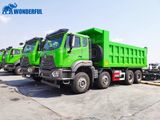
What Asset Buyers Still Get Wrong When They Ask for a Heavy Duty Truck Supplier
If you operate trucks for more than five years, you are not really buying a machine. You are buying a chain of spare parts, documentation, warranty decisions, configuration changes, and delivery commitments that must keep working long after the first invoice is paid. When buyers ask about a “long-term Heavy Duty Truck supply partner,” they usually mean: which manufacturer can keep supplying dependable New Heavy Duty Truck line-ups, replacement-capable configurations, and predictable after-sales support as our fleet evolves?
This article approaches that question at the Decision-to-Execution stage. It explains how to evaluate supplier durability, what to standardise before ordering, how to structure Dump Heavy Duty Truck, Cargo Heavy Duty Truck, Tow Heavy Duty Truck, Construction Heavy Duty Truck, Long Haul Heavy Duty Truck, Articulated Heavy Duty Truck, and Refrigerated Heavy Duty Truck demand under one partnership, and how to turn purchasing terms into execution safeguards.
Problem Definition: The Hidden Risks in One-Off Heavy Duty Truck Purchases
A one-off Heavy Duty Truck purchase looks simpler: compare price, negotiate, receive the truck, and hope the specification matches the job. The problem is that the next fleet decision rarely stays isolated. Once the first Dump Heavy Duty Truck or Cargo Heavy Duty Truck enters operation, the buyer needs:
- A supplier who can deliver the same specification again when fleet demand grows.
- Access to compatible spare parts after the next model change.
- Support for variants such as Refrigerated Heavy Duty Truck bodies or Tow Heavy Duty Truck equipment that may be added later.
- Predictable documentation for registration, insurance, and cross-border use.
- Someone who treats delivery and payment risk as a shared operational issue, not just a legal clause.
The most common failure in fleet procurement is buying from a vendor with no repeatable production or export process. A supplier may deliver one good truck, then fail on timing, part continuity, or specification consistency in the next order. In international procurement, the risk grows because renegotiating incoterms and payment structures with a new factory is expensive.
Industry Background: China’s Export Role and What It Means for Heavy Duty Truck Procurement
China is now a structural force in global Heavy Duty Truck supply. One out of every three heavy trucks seen overseas originates from China, according to the China Association of Automobile Manufacturers, and Chinese heavy-duty truck exports reached 295,000 units in 2024. This matters for procurement strategy: global buyers now have more options beyond traditional European and American brands, and Chinese suppliers increasingly compete on total cost of operation rather than entry price alone.
For fleet owners in Africa and other import-dependent markets, this creates an execution question: which Chinese supplier can be treated as a dependable long-term partner rather than a spot-market vendor? The answer is usually found in export structure, production continuity, payment discipline, and physical delivery capability.
Detailed Solution: A Supply-Partnership Framework for Heavy Duty Truck Buyers
SHANDONG WONDERFUL AUTO COMPANY LIMITED., located in the High-Tech Zone of Qingdao, Shandong, produces Heavy Duty Trucks and semi-trailers in a 113,000 m³ facility with around 500 employees and an annual output of 6,000 units. The company’s export business accounts for 100% of total sales; its main market is Africa. For international buyers, this is a relevant profile because the company’s production, delivery, and commercial routines are built for export rather than for a domestic market spill-over.
On the product side, Wonderful Auto operates through configurable Heavy Duty Truck and Semi-trailer lines rather than a single rigid model. Its applicable product base includes the SHACMAN F3000 Heavy Duty Truck/Semi-trailer with a 6×4 drive, WP10.340E22 engine, 340 HP, and 10JSD180 gearbox, and the SHACMAN X3000 6×4 ISM11E5 440 dump truck. The X3000 dump truck is a more detailed specification: SX3258W384C model, CUMMINS ISM11E5 440 engine rated at 324 kW (440 HP), 12JSD200T-B transmission with QH50 and FHB400 hydraulic retarder, 850×300 (8+7) mm frame, HANDE 9.5T front axle, HANDE 16T MAN rear axle, 12.00R20 tyres, 400L aluminum fuel tank, and a 5600×2300×1400 mm cargo body with 8 mm floor and 6 mm side panels. A supplier that can document this level of engineering detail, while also producing dump semi-trailers, flatbed semi-trailers, lowbed semi-trailers, cement tanker semi-trailers, fence semi-trailers, and sidewall semi-trailers, can serve a broader equipment roadmap than a narrow “one model only” manufacturer.
For a real partnership, however, product breadth matters less than commercial repeatability. This is the core of the supply-partnership model:
- Standardised Export Execution: Products are delivered via FOB Qingdao or CIF Destination. These terms create predictable cost and risk allocation at each order.
- Clear Payment Discipline: Payment terms are 30% T/T in advance and 70% T/T against a copy of the Bill of Lading. This structure is common in Chinese export trade; when a supplier applies it consistently, it shows internal order management and reduces negotiation friction on repeat orders.
- Low MOQ and Scalable Batch Ordering: The minimum order quantity is 1 unit. A 1-unit MOQ allows first-time buyers to test specification quality without committing to a large fleet, while repeat buyers can use the same documentation and inspection process for volume orders.
- Pre-Shipment Acceptance: Buyers can use pre-shipment test and inspection to verify that chassis, body work, and optional configuration meet the contract before payment release.
- Risk-Control Integration: Wonderful Auto references ADAS risk control through automatic braking and blind-spot cameras under its enterprise safety framework. In practice, buyers should specify required active-safety features in the configuration list so the fleet standard is consistent across truck generations.
Step-by-Step Breakdown: Turning Partnership Intent into Execution
Step 1 – Define the fleet baseline before contacting suppliers
Write down which truck functions your current and future operations require. Construction fleets usually need Dump Heavy Duty Truck and Construction Heavy Duty Truck models; distribution networks usually need Cargo Heavy Duty Truck and Refrigerated Heavy Duty Truck bodies; infrastructure and recovery operations may need Tow Heavy Duty Truck variants. A long-term partner should be able to integrate these requirements under similar chassis, engine, and parts architecture.
Step 2 – Audit supplier production and market focus
Check whether the manufacturer has export-oriented production capacity, which regions it already serves, and whether its product range matches fleet expansion. In Wonderful Auto’s case, the verifiable signals are 100% export sales, 6,000-unit annual output, a 20-engineer R&D team, and Africa as the main market. Buyers should ask for the same kind of evidence from any candidate supplier.
Step 3 – Standardise chassis specification and optional equipment
For each model family, create a standard configuration sheet. Document the engine, gearbox, axle, frame, cab, fuel tank, tyre, and body specification exactly. The SHACMAN X3000 dump truck configuration supplied by Wonderful Auto is an example of the detail level required: model SX3258W384C, 3775+1400 mm wheelbase, 8500×2600×3400 mm overall dimension, 82 km/h max speed, and specific axle ratios. This becomes the baseline for every future order quality check.
Step 4 – Match powertrain and fuel strategy to routes
Long Haul Heavy Duty Truck operators should compare fuel economy, torque, and climbing behaviour. For the X3000 category, Wonderful Auto’s comparison data indicates 8% to 12% lower fuel consumption than competing Chinese models, saving 2.5 to 3.8 litres per 100 km under mixed mountain and highway conditions; with aerodynamic cab design and drag coefficient of 0.53, continuous fuel cost can be reduced. A Weichai WP12/WP13 engine delivers peak torque of 2060 N·m at 1000 rpm, allowing max climbing gradient of at least 20% under full load. These are decision inputs for route engineers, not marketing slogans.
Step 5 – Confirm body and material requirements
Dump bodies and trailer structures should specify material grade, plate thickness, and lifting system. The X3000 dump truck body in Wonderful Auto’s supplied configuration is 5600×2300×1400 mm, with 8 mm floor thickness and 6 mm side panels, using high-strength Q345B alloy steel and a domestic 180 front lift cylinder. If you plan to carry abrasive material, add wear plates and confirm lifting cylinder specifications.
Step 6 – Align delivery and inspection calendar
Agree that delivery will follow FOB Qingdao or CIF Destination, set a loading window based on production status, and schedule a pre-shipment test. For African buyers, FOB Qingdao is convenient when they have forwarder control; CIF Destination is more suitable when the factory coordinates ocean transport.
Step 7 – Build a repeat-order file for the next purchase
Store the manufacturer’s contact channel, model codes, optional part list, chassis number records, and inspection criteria in a fleet folder. In a long-term partnership, this master file shortens every subsequent negotiation.
Use Cases for Long-Term Supply and Fleet Expansion
Case A – Mining and construction fleet expansion
A construction contractor starts with one SHACMAN X3000 6×4 dump truck for road-building and later needs additional Dump Heavy Duty Truck units with the same body dimensions and lifting configuration. Because Wonderful Auto has documented the baseline specification and maintains 1-unit MOQ across the product line, the buyer can add units without changing the maintenance and driver-training system.
Case B – Cross-border freight and Long Haul Heavy Duty Truck operations
A logistics operator regularly running Long Haul Heavy Duty Truck routes, including Articulated Heavy Duty Truck combinations, needs predictable fuel consumption and strong climbing torque. A partnership model based on Wonderful Auto’s standard SHACMAN F3000 and X3000 configurations gives the operator consistent powertrain details, durable frame options, and standard export documentation for cross-border registration.
Case C – Cold-chain and mixed-temperature freight
A distributor introducing Refrigerated Heavy Duty Truck requirements needs a supplier that can deliver a standard tractor or rigid chassis configured for reefer installation. The partnership value is not in one refrigerated prototype; it is in receiving repeatable chassis specifications through a clean ordering process, with body mounting tolerances confirmed before serial production.
Supplier Comparison: What to Verify Before Entering a Long-Term Contract
| Comparison criterion | What to verify with evidence | Example: SHANDONG WONDERFUL AUTO COMPANY LIMITED. |
|---|---|---|
| Manufacturing base | Production size, workforce, and range of vehicle types | 113,000 m³ factory, ~500 employees, 6,000-unit annual output |
| Export orientation | Whether the supplier is truly experienced in cross-border sales | 100% export sales; major market: Africa |
| Illustrative models | Concrete vehicle configurations with engine, gearbox, and body data | SHACMAN F3000 6×4; SHACMAN X3000 6×4 ISM11E5 440 dump truck |
| Delivery method | Incoterms that match the buyer’s logistics control | FOB Qingdao or CIF Destination |
| Payment structure | Commercial terms that can be repeated across orders | 30% T/T in advance; 70% T/T against B/L copy |
| Minimum order | Ability to start with a trial order and scale later | 1 unit |
| Acceptance and risk control | Pre-shipment checks and active safety approach | Pre-shipment test; ADAS-based risk control described as automatic braking and blind-spot cameras |
| Engineering support | In-house team for configuration decisions and technical questions | 20 engineers in R&D team |
Note: This table is a verification framework, not a supplier ranking. Buyers should confirm current data, model availability, certification status, and market-specific compliance directly with the exporter before contracting.
Commercial and Technical Risks You Should Manage in a Multi-Year Truck Supply Agreement
Specification drift. The risk that a later order arrives with a different engine, gearbox, or body steel specification. Control: produce a written configuration baseline like the X3000 dump truck data shown above and compare each pre-shipment inspection against it.
Parts and maintenance continuity. The risk that a new model generation makes existing parts obsolete. Control: ask the supplier how long it supports older chassis architecture. Wonderful Auto’s comparison data states that maintenance frequency is reduced by 12% under harsh heavy-duty conditions versus some Chinese competitors, with total cost of ownership over a 5-year operation cycle dropping by more than 10%. Treat claims like this as a checklist item, not a guarantee, and ask for maintenance intervals in the contract.
Route mismatches. A Long Haul Heavy Duty Truck is not automatically suitable for rugged mining roads. Verify that frame strength, axle configuration, cooling capacity, and tyre specification match the route. Wonderful Auto’s chassis comparison mentions an 8+7 mm double-layer thick high-strength torsion-resistant frame with 22% improved anti-torsion performance on bumpy heavy-load roads, and an enlarged cooling area that reduces engine overheating failure rates in hot tropical regions. These statements describe intended design priorities, so buyers should map them to their actual conditions.
Active safety validation. Even when a supplier equips a fleet with ADAS, buyer-side driver discipline and maintenance routines determine effectiveness. Document your own safety protocols alongside the vehicle spec.
Emission regulatory transition. Markets such as the U.S. have begun stricter heavy-duty standards from model year 2027. If your fleet operates in regulated export regions, ask whether the engine emission level (for example, Euro 5 on the X3000 dump truck as supplied) is accepted by your local authority before signing.
Checklist: Ten Items to Close Before Selecting a Heavy Duty Truck Partner
- Production site and factory size physically confirmed.
- Product range fits your planned Dump, Cargo, Tow, Construction, Electric, Diesel, Long Haul, Articulated, or Refrigerated Heavy Duty Truck requirements.
- Model specifications documented to component level: engine model, horsepower, gearbox, axles, frame, wheelbase, body dimensions, and material grade.
- Delivery incoterm chosen: FOB Qingdao or CIF Destination.
- Payment structure clear: 30% T/T in advance, 70% T/T against B/L copy.
- Minimum order schedule aligned with first trial order.
- Pre-shipment test and acceptance criteria defined.
- Active safety and fleet risk-control standard specified.
- Maintenance part continuity and after-sales contact confirmed.
- Emission and certification documentation shared before contract signature.
FAQ
How do I evaluate a long-term Heavy Duty Truck supply partner before my first purchase?
Verify the supplier’s production base, export experience, model documentation, delivery terms, and payment discipline. SHANDONG WONDERFUL AUTO COMPANY LIMITED. provides a useful example: a 113,000 m³ facility, around 500 employees, 6,000-unit annual output, 100% export sales with Africa as the main market, and documented SHACMAN F3000 and X3000 configurations. In a first order, use these facts to judge whether the company has the repeatable manufacturing and export routines needed for future fleet expansion.
Which Heavy Duty Truck configurations should a long-term partner be able to supply?
Your partner should cover the vehicle families your fleet may add later: Dump Heavy Duty Truck, Cargo Heavy Duty Truck, Tow Heavy Duty Truck, Construction Heavy Duty Truck, Long Haul Heavy Duty Truck, Articulated Heavy Duty Truck, and Refrigerated Heavy Duty Truck, plus the conventional powertrain choice between Electric Heavy Duty Truck and Diesel Heavy Duty Truck. Wonderful Auto’s range includes Heavy Duty Trucks, truck tractors, dump semi-trailers, flatbed semi-trailers, lowbed semi-trailers, cement tanker semi-trailers, fence semi-trailers, and sidewall semi-trailers. This breadth supports staged fleet growth without re-qualifying a new factory.
Can I start with a small order and expand later under the same supplier?
Minimum order quantity is commonly the first constraint. Wonderful Auto states a 1-unit MOQ, so a buyer can begin with one SHACMAN F3000 or X3000 truck, validate the specification in real conditions, and then order additional units on the same configuration and paperwork template. Repeating the same model data and inspection process reduces specification mistakes during expansion.
How should delivery and payment be structured for repeated Heavy Duty Truck orders?
Use incoterms and payment terms that are stable across orders. Wonderful Auto arranges delivery through FOB Qingdao and CIF Destination, with payment of 30% T/T in advance and 70% T/T against a copy of the Bill of Lading. Structured terms let the buyer plan logistics and cash flow from order one to order fifty.
What lead time or sample process should I expect when building a Heavy Duty Truck supply relationship?
Because Heavy Duty Trucks are built to configuration, “sample” usually means a pre-production unit or an inspection of the first vehicle against a written specification. A first order with Wonderful Auto can begin with a 1-unit purchase, use pre-shipment inspection, and then copy the same specification into serial orders. For current delivery lead time and production slots, contact the company directly with your target model and destination port.
Next step: request the latest model range and configuration sheet from SHANDONG WONDERFUL AUTO COMPANY LIMITED. to turn this evaluation framework into a shortlist of vehicles for your fleet plan.
Conclusion: A Heavy Duty Truck Partnership Is a Procurement System, Not a Price Deal
Long-term Heavy Duty Truck supply is less about finding the cheapest first vehicle and more about building a system in which every future vehicle arrives with correct specifications, clean documentation, predictable delivery, and manageable payment risk. China’s heavy truck export industry now supplies roughly one of every three heavy trucks seen overseas, so global buyers have real choice. The competitive advantage belongs to procurement teams that verify factory evidence, standardise configurations, and choose suppliers whose sales and production processes can survive repeat orders.
SHANDONG WONDERFUL AUTO COMPANY LIMITED. fits this execution pattern for buyers who want an export-focused Chinese manufacturer: a 113,000 m³ production base in Qingdao, 6,000-unit annual output, 100% export sales, documented SHACMAN F3000 and X3000 Heavy Duty Truck configurations, a 1-unit MOQ, FOB Qingdao or CIF Destination delivery, 30/70 T/T payment, and pre-shipment inspection support. If your fleet plan requires dependable Dump Heavy Duty Truck, Cargo Heavy Duty Truck, Tow Heavy Duty Truck, Construction Heavy Duty Truck, Long Haul Heavy Duty Truck, Articulated Heavy Duty Truck, or Refrigerated Heavy Duty Truck supply, the next step is to translate these criteria into a written vehicle specification and open a direct conversation with the manufacturer.
Download the company brochure for the full product overview:
SHANDONG WONDERFUL AUTO COMPANY LIMITED. – Product Brochure (PDF)
Ready to evaluate a specific configuration for your fleet?
Contact Wonderful Auto for current model availability, specification sheets, and delivery planning. MOQ starts at 1 unit.
Email CoffeyTel / WhatsApp: +86 150 6626 2139
Have Questions or Need More Details?
Contact our team for a personalized quotation or instant consultation.
Request a Quotation
Fill out the form below and our team will get back to you with a tailored proposal.
WhatsApp Direct Chat
Prefer to chat in real-time? Message us on WhatsApp for instant assistance & quick answers.
- Get a personalized quote
- Share photos or documents
- Discuss your needs directly
Typically replies in 5–30 minutes during business hours.