
How to Compare Heavy Duty Trucks for Construction Fleets
Choosing the right heavy duty truck for a construction fleet is a high-stakes decision. The vehicle you select must handle dump bodies, cargo loads, towing operations, and long highway runs, often on rough terrain and in hot climates. Suppliers use different terminology and test methods, which makes direct comparison difficult. This guide turns the selection process into a repeatable framework: define your application, compare measurable performance data, estimate total cost of ownership, and verify the manufacturer's capability. Throughout, we use SHANDONG WONDERFUL AUTO COMPANY LIMITED as a concrete example because its published specifications and performance claims illustrate what to look for.
Problem Definition
Construction fleet managers face several problems when comparing heavy duty truck manufacturers. First, specification sheets do not always tell the same story: one brand may quote engine power, another may emphasize torque; one may claim high payload, another may stress fuel efficiency. Second, on-site operating conditions vary widely; a truck that performs well on a smooth highway may struggle on a constant grade. Third, purchase price is only part of the cost story; maintenance, fuel, and downtime determine the real total cost. Without a structured comparison, fleet buyers often fall back on brand reputation or the lowest upfront quote, which can be expensive over a five-year operating cycle. The core problem, then, is not a lack of options; it is a lack of decision-grade evidence.
Industry Background
The commercial vehicle market is large and increasingly international. According to Global Market Insights, the global heavy-duty trucks market was estimated at USD 308.3 billion in 2025 and is projected to reach USD 475.5 billion by 2035. In China, heavy-duty truck exports reached 295,000 units in 2024, up from 276,000 units in 2023, according to Shacman Industry Report/CAAM. During the first half of 2024, CAAM also reported that one in three heavy trucks seen overseas originated from China. At the same time, the powertrain mix is shifting: the global electric heavy-duty truck market is projected to grow from USD 14.84 billion in 2026 to USD 101.02 billion by 2034 (Fortune Business Insights), and S&P Global Ratings forecasts electric heavy-duty truck penetration in China to exceed 20% in 2026. These trends mean construction fleet buyers now compare suppliers not only across domestic brands but also across international and electric options. A comparison framework that works for both diesel and electric, and for both local and export suppliers, is essential.
Detailed Solution: Six Metrics Every Construction Fleet Buyer Should Compare
Based on published performance data and manufacturing capability, these six metrics cover the majority of purchase decisions for construction heavy duty trucks.
1. Fuel Economy
Fuel is one of the largest operating costs for a heavy duty truck. Under mixed mountain and highway conditions, the SHANDONG WONDERFUL AUTO heavy duty truck achieves 8% to 12% lower fuel consumption than peer competitors, saving 2.5 to 3.8 liters per 100 km. The manufacturer credits the result to an aerodynamic cab and integrated powertrain calibration; the drag coefficient is 0.53, which is 18% lower than mainstream models. For a fleet running 200,000 km per year, a saving of 2.5–3.8 L/100 km can represent thousands of liters annually. When comparing suppliers, ask for fuel economy data under your specific route profile, not just the standard test cycle.
2. Power & Climbing Capacity
Torque, not peak horsepower, determines how well a loaded truck climbs. The Wonderful Auto heavy duty truck uses a Weichai WP12/WP13 engine that delivers peak torque of 2,060 N·m at 1,000 rpm, with a wide torque band. The maximum climbing gradient is at least 20% under full load, and climbing power is 15% stronger than competitors. This reduces gear shifting on long uphill roads and improves average speed. For a dump truck leaving a quarry with a full payload, this is a critical differentiator.
3. Chassis Durability
Construction haul roads are rarely smooth. The frame of the Wonderful Auto truck uses an 8+7 mm double-layer thickened high-strength torsion-resistant steel structure, which improves anti-torsion performance by 22% on bumpy heavy-load roads. The cooling area is enlarged by 15%, reducing the engine overheating failure rate by 30% in hot tropical regions. These numbers matter in environments where dust, heat, and potholes cause premature frame cracks and cooling system failures.
4. Total Cost of Ownership
TCO includes purchase price, fuel, maintenance, and unplanned downtime. Compared with European heavy trucks, the purchase cost is 30% to 35% lower. Compared with some Chinese competitors, maintenance frequency is reduced by 12% under harsh heavy-duty conditions. Combined with the 8% to 12% fuel savings, total cost of ownership over a 5-year operating cycle drops by more than 10%. When comparing suppliers, model these numbers over your fleet's average annual mileage and expected life.
5. Safety & Risk Mitigation
Construction sites create constant collision risk: rear-end impacts when trucks stop suddenly on dusty roads, blind-spot accidents when large vehicles turn, and rollover events on uneven grades. The risk control package on Wonderful Auto trucks addresses these with ADAS automatic braking, blind-spot cameras, ESC, and safe following distance protocols. These systems reduce both accident frequency and severity. Ask the supplier which of these are standard versus optional.
6. Supplier Capability & Support
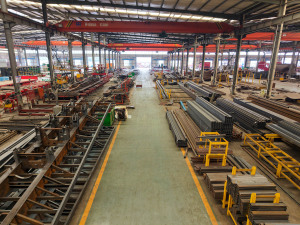
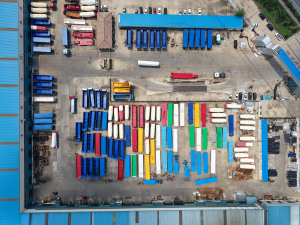
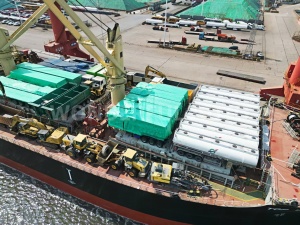
Even the best truck is only as good as the manufacturer behind it. SHANDONG WONDERFUL AUTO COMPANY LIMITED, a Qingdao-based manufacturer founded in 2024, operates a 113,000 m³ factory with 500 employees and an annual output of 6,000 units. Its R&D team includes 20 engineers, and 100% of production is exported, primarily to Africa. This export focus means the company is used to working with overseas buyers and managing documentation, shipping, and parts supply. Buyers should always verify a supplier's production capacity, export references, and engineering team before making a decision.

Step-by-Step Break Down
A step-by-step framework for comparing heavy duty trucks:
- Define your application profile. List the exact jobs: dump/haul, cargo/container, tow, refrigerated, long-haul, or a mix. This determines which metrics carry the most weight.
- Set a fuel-economy baseline. Record the average distance, elevation changes, and payload for your typical routes.
- Compare engine torque curves. Ask for peak torque, the rpm at which it is delivered, and the torque band width.
- Inspect the chassis specification. Check frame thickness, material strength, and cooling capacity for hot-climate duty.
- Calculate a 5-year TCO. Use the numbers from fuel consumption, maintenance intervals, and projected residual value.
- Review safety systems. Determine whether ADAS, blind-spot cameras, ESC, and following-distance warnings are included.
- Audit the manufacturer. Verify factory size, annual output, R&D headcount, export experience, and communication responsiveness.
- Request documentation. Ask for a brochure, specification sheet, and quotation. If possible, inspect a unit or a production facility before committing.
Use Cases: How These Metrics Apply to Common Construction Fleet Use Cases
The comparison framework becomes clearer when translated into specific jobs.
- Dump heavy duty truck for quarry and earthmoving: full-load climbing capacity is essential. The maximum climbing gradient of at least 20% under full load, combined with the high-torque Weichai WP12/WP13 engine, supports continuous uphill hauling.
- Cargo heavy duty truck for construction materials: frequent deliveries between depots, suppliers, and sites benefit from the 8% to 12% fuel savings and lower maintenance intervals.
- Tow heavy duty truck for equipment recovery: chassis durability and frame strength are directly relevant. The 8+7 mm double-layer torsion-resistant frame improves durability on uneven terrain.
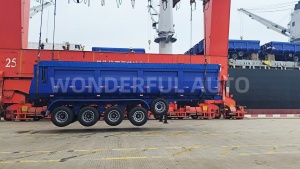
- Long-haul and cross-border freight: the product is designed for long-haul semi-trailer container transport, heavy-duty bulk cargo transport in mountainous areas, and cross-border freight transport. This makes it a fit for fleets that combine local construction work with regional shipping.
- Electric heavy duty truck consideration: if your fleet is starting to evaluate electric models, use the same TCO and duty-cycle framework. The electric heavy-duty truck market is growing, but the availability of charging infrastructure and route length remain the main constraints. Verify each manufacturer's electric roadmap separately, because specifications and pricing are still evolving.
Comparison Table: SHANDONG WONDERFUL AUTO Heavy Duty Truck
To make the comparison concrete, the table below summarizes the key performance advantages published for the SHANDONG WONDERFUL AUTO heavy duty truck.
| Metric | SHANDONG WONDERFUL AUTO Truck | Why It Matters |
|---|---|---|
| Fuel consumption (mixed mountain & highway) | 8–12% lower vs Chinese competitors; saves 2.5–3.8 L/100 km | Lower daily operating cost |
| Purchase price | 30–35% lower than European heavy trucks | Lower initial capital cost |
| Maintenance frequency | 12% lower vs some Chinese competitors in harsh duty | Less downtime and fewer service stops |
| 5-year total cost of ownership | >10% lower | Better long-term fleet economics |
| Engine torque & climbing | 2,060 N·m at 1,000 rpm; max climbing gradient ≥20% under full load; 15% stronger climbing power | Stronger performance on grades |
| Frame & cooling | 8+7 mm double-layer high-strength frame; 22% better anti-torsion; 15% larger cooling area; 30% lower overheating failure rate | Better durability on rough roads and in hot climates |
| Safety | ADAS automatic braking, blind-spot cameras, ESC, safe following distance | Reduced collision risk |
| Drag coefficient | 0.53, 18% lower than mainstream models | Additional fuel savings at highway speed |
Frequently Asked Questions
What safety features should construction fleet buyers look for in a heavy duty truck?
Look for active systems that address the three most common collision types: rear-end collisions, blind-spot accidents, and rollover. SHANDONG WONDERFUL AUTO COMPANY LIMITED equips its heavy duty trucks with ADAS automatic braking, blind-spot cameras, ESC, and safe following distance protocols. These features help reduce collision risk in construction environments where visibility and braking distance are constantly changing.
What applications are these heavy duty trucks designed for?
The truck is designed for long-haul semi-trailer container transport, heavy-duty bulk cargo transport in mountainous areas, and cross-border freight transport. For construction fleets, this means it can handle both off-road hauling of aggregates and on-highway container movements.
How does the total cost of ownership compare with other heavy duty trucks?
The purchase cost is 30% to 35% lower than European heavy trucks. Fuel consumption is 8% to 12% lower than comparable Chinese models, saving 2.5 to 3.8 liters per 100 km. Maintenance frequency is reduced by 12% under harsh conditions compared with some Chinese competitors. Over a 5-year operating cycle, total cost of ownership drops by more than 10%.
How can a fleet buyer request a sample or quotation?
You can contact SHANDONG WONDERFUL AUTO COMPANY LIMITED at Coffey@wonderful-autos.com or via WhatsApp at +86 150 6626 2139. A company brochure with product details is available for download at the end of this article.
Conclusion
Comparing heavy duty trucks for a construction fleet is not about memorizing spec sheets. It is about connecting each specification to a real operating outcome: fuel saved per kilometer, torque delivered on a grade, durability on a rough haul road, and the supplier's ability to support you over five years. SHANDONG WONDERFUL AUTO COMPANY LIMITED offers a credible data set for these comparisons, particularly for buyers looking for lower ownership costs and robust performance in tough conditions. If you are in the final evaluation stage, download the company brochure below and contact the team to get a quotation or discuss your fleet configuration.
Download the SHANDONG WONDERFUL AUTO brochure here: Wonderful Auto.pdf
Contact: Coffey | Email: Coffey@wonderful-autos.com | Tel/WhatsApp: +86 150 6626 2139 | Address: Room 1301, Building 1, No.8 Zhilidao Road, High-Tech Zone, Qingdao, Shandong, China
Have Questions or Need More Details?
Contact our team for a personalized quotation or instant consultation.
Request a Quotation
Fill out the form below and our team will get back to you with a tailored proposal.
WhatsApp Direct Chat
Prefer to chat in real-time? Message us on WhatsApp for instant assistance & quick answers.
- Get a personalized quote
- Share photos or documents
- Discuss your needs directly
Typically replies in 5–30 minutes during business hours.