
SHACMAN X3000 vs SINOTRUK 6x4 Dump Truck: A Head-to-Head Heavy Duty Truck Decision
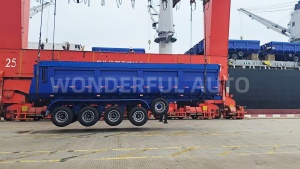
A fleet that has already reduced its shortlist to two 6×4 dump trucks is no longer shopping for a category. It is deciding between two concrete configurations and two sets of consequences: the SHACMAN X3000 6×4 dump truck, model SX3258W384C, specified with a CUMMINS ISM11E5 engine rated at 440 HP under EURO 5, and the SINOTRUK 6×4 dump truck, model ZZ3257N384GB1R, specified with a WD615.47 engine rated at 371 hp. Both are six-wheel-drive heavy duty dump trucks. They are not interchangeable.
This head-to-head is written for the buyer who has moved past discovery into execution — the importer, distributor, fleet owner or project manager who has to justify the order internally, agree commercial terms, pass an acceptance test, and then keep the trucks working for years. It compares engine output, drive configuration, documented chassis and cooling data, and intended site suitability, then maps both options to fleet needs, purchasing terms and the long-term supply layer that decides what the fleet really costs.
The Decision in Front of You
The question is not which truck is better in the abstract. It is which configuration completes your haul cycle at an acceptable cost per tonne moved, and which supply relationship keeps that cycle running long after the warranty conversation ends.
Both configurations are 6×4 dump trucks in the same class of heavy duty truck. The SHACMAN X3000 SX3258W384C carries more rated output — 440 HP against 371 hp — and is specified to EURO 5. The SINOTRUK ZZ3257N384GB1R carries the WD615.47 at 371 hp. Everything else that matters — transmission match, chassis specification, cooling margin, delivery terms, spare-part continuity — has to be confirmed rather than assumed, which is exactly what this decision framework is for.
Problem Definition: Three Ways This Comparison Goes Wrong
Most bad dump truck orders fail for one of three predictable reasons.
1. The comparison stops at rated horsepower. A 440 HP figure and a 371 hp figure describe engine output, not haul performance. Two trucks with different rated output can post the same daily tonnage on the same site if the road is flat and the round trip is short. Conversely, a truck with a higher rating can underperform on a specific route if its gearing, chassis or cooling margin does not suit the terrain. Rated output is an input to the decision, not the decision.
2. The duty cycle is never written down. Grade percentage, round-trip distance, surface condition, daily tonnage target, shift pattern, altitude and ambient temperature determine which configuration survives a five-year operating life. Buyers who skip this step tend to over-specify on flat sites and under-specify on sustained gradients — both expensive, in opposite directions.
3. The purchase is treated as a one-off transaction. Dump trucks are bought to be worked. The value of the second, fifth and tenth unit is decided by how easily the supplier can repeat a configuration, supply parts, and support a fleet that grows. That is why the final section of this article covers the long-term supply partnership layer, not just the specification sheet.
Industry Background: Where Chinese Heavy Duty Trucks Sit
The global heavy-duty trucks market was estimated at USD 308.3 billion in 2025 and is projected to reach USD 475.5 billion by 2035, according to Global Market Insights. Within that market, Chinese manufacturers have moved from a regional option to a mainstream supply source: China's heavy-duty truck exports reached 276,000 units in 2023, a 58% year-on-year increase, and rose to 295,000 units in 2024. In the first half of 2024, one out of every three heavy trucks seen overseas originated from China, according to the China Association of Automobile Manufacturers.
Concentration at the top of the market is still high. Daimler Truck led globally with a share of over 12% in 2025, and the top five players — Daimler, PACCAR, Sinotruk, TRATON and Volvo — held 32% collectively, according to Global Market Insights. For a buyer comparing a SHACMAN X3000 against a SINOTRUK configuration, that context matters: both brands sit inside a Chinese export ecosystem that now supplies a third of the heavy trucks delivered outside China, which in turn supports parts availability and price competition.
The powertrain mix is also shifting. The global electric heavy-duty truck market is projected to grow from USD 14.84 billion in 2026 to USD 101.02 billion by 2034, and heavy-duty electric truck penetration in China is forecast to exceed 20% in 2026, driven by subsidy-led replacement and charging infrastructure growth. Regulation is moving in the same direction: the US EPA finalized its 'Phase 3' greenhouse gas standards for heavy-duty vehicles starting in model year 2027, requiring roughly an 80% reduction in NOx. Diesel 6×4 dump trucks remain the volume workhorse for construction and bulk haulage, but the compliance environment around them keeps tightening.
Configuration A: SHACMAN X3000 6×4 Dump Truck (SX3258W384C)
The SHACMAN X3000 6×4 dump truck in this comparison, model SX3258W384C, is specified with a CUMMINS ISM11E5 engine rated at 440 HP under EURO 5, on a 6×4 drive configuration. That combination places it at the higher end of output for a six-wheel-drive dump truck intended for sustained loaded work.
Documented platform performance data for the X3000 family adds detail that a bare horsepower figure hides. The platform is offered with more than one engine family; published platform data records a Weichai WP12/WP13 engine family with peak torque of 2,060 N·m at 1,000 rpm and a wide torque band, while the unit compared here carries the CUMMINS ISM11E5 at 440 HP under EURO 5. On the chassis side, the same platform documentation records an 8+7 mm double-layer high-strength torsion-resistant frame with a 22% improvement in anti-torsion performance on bumpy, heavily loaded roads, and a cooling area enlarged by 15%, which reduced engine overheating failure rate by 30% in hot tropical regions.
Documented fuel and cost positioning for the platform is equally specific: with an aerodynamic cab and integrated powertrain calibration, the X3000 family records 8%–12% lower fuel consumption than peer competitors under mixed mountain and highway conditions, a saving of 2.5–3.8 litres per 100 km, with a drag coefficient (Cd) of 0.53, described as 18% lower than mainstream models. Maximum climbing gradient is recorded at ≥20% under full load, with 15% stronger climbing power than competitors and less frequent gear shifting on long uphill roads. Purchase cost is documented as 30%–35% lower than European heavy trucks, maintenance frequency is recorded as 12% lower under harsh heavy-duty conditions versus some Chinese competitors, and total cost of ownership over a five-year operating cycle is documented as more than 10% lower.
Configuration B: SINOTRUK 6×4 Dump Truck (ZZ3257N384GB1R)
The SINOTRUK 6×4 dump truck in this comparison, model ZZ3257N384GB1R, is specified with a WD615.47 engine rated at 371 hp on a 6×4 drive configuration. That is a lower rated output than the X3000 configuration described above, on the same drive layout.
The documentation available for this comparison does not include further published performance figures for the ZZ3257N384GB1R — consumption, chassis treatment or cooling data are not stated, so they should be verified with the supplier against your own duty cycle rather than assumed. That is not a criticism of the model; it is a statement about what can and cannot be claimed. A 371 hp 6×4 dump truck is a legitimate configuration, and on flatter sites, shorter haul cycles and mixed construction work it can complete the same duty cycle as a higher-output unit while leaving more margin in the purchase budget.
The practical question for the SINOTRUK option is therefore where the 371 hp rating sits relative to your worst-case loaded gradient. If loaded grades are short and road surfaces are reasonable, the lower rating is unlikely to be the constraint. If the truck will spend most of its working life climbing fully loaded with a high daily tonnage target, the margin between 371 hp and 440 HP becomes a commercial variable rather than a specification detail — and it should be tested against route data, not intuition.
Side-by-Side Comparison
The table below compares only the facts that are documented for this pair. Where a figure is not stated in the source documentation, it is marked for verification instead of being estimated.
| Decision dimension | SHACMAN X3000 6×4 dump truck (SX3258W384C) | SINOTRUK 6×4 dump truck (ZZ3257N384GB1R) |
|---|---|---|
| Drive configuration | 6×4 | 6×4 |
| Engine | CUMMINS ISM11E5 | WD615.47 |
| Rated output | 440 HP | 371 hp |
| Emission level | EURO 5 | Verify the emission certification of the specific offered unit |
| Documented torque reference | Platform documentation records a Weichai WP12/WP13 engine family with peak torque 2,060 N·m at 1,000 rpm and a wide torque band | Not stated in the documentation provided for this comparison |
| Documented chassis data | 8+7 mm double-layer high-strength torsion-resistant frame; 22% improved anti-torsion performance on bumpy heavy-load roads | Not stated in the documentation provided for this comparison |
| Documented cooling data | Cooling area enlarged 15%; engine overheating failure rate reduced 30% in hot tropical regions | Not stated in the documentation provided for this comparison |
| Documented fuel positioning | 8%–12% lower fuel consumption than peer competitors under mixed mountain and highway conditions; 2.5–3.8 L/100 km saving; Cd 0.53 | Not stated in the documentation provided for this comparison |
| Documented climbing data | Maximum climbing gradient ≥20% under full load; 15% stronger climbing power than competitors; less gear shifting on long uphill roads | Not stated in the documentation provided for this comparison |
| Documented cost positioning | Purchase cost 30%–35% lower than European heavy trucks; maintenance frequency 12% lower under harsh conditions vs some Chinese competitors; 5-year TCO more than 10% lower | Confirm current commercial positioning with the supplier |
| Typical duty fit (mapping, not a claim of exclusivity) | Sustained loaded work: long grades, long-haul bulk cargo, mountainous routes, high ambient temperatures | Shorter haul cycles, flatter sites, mixed construction and aggregate work where 371 hp matches the route |
| Commercial terms | MOQ 1 unit; delivery on FOB Qingdao or CIF Destination; 30% T/T in advance and 70% T/T against copy of B/L; acceptance criterion is a pre-shipment test | |
Step-by-Step: Seven Checks From Shortlist to Execution
At decision-to-execution stage, the sequence matters as much as the answer. The following order prevents an expensive correction later.
- Write down the duty cycle. Record round-trip distance, loaded and empty gradients, surface condition, daily tonnage target, shift pattern and ambient temperature range. This document decides the comparison, not the brochure.
- Test rated output against the worst loaded grade. Compare 440 HP (CUMMINS ISM11E5) and 371 hp (WD615.47) against the steepest sustained climb in the cycle, not the average road. Documented X3000 platform data records a maximum climbing gradient of ≥20% under full load; apply the same test to the SINOTRUK configuration using verified figures.
- Confirm the transmission and PTO match. Rated output only reaches the ground through the gearbox and final drive. Ask both suppliers to state the exact gearbox model, ratio spread and PTO configuration for the offered unit, and check the ratio spread suits the gradient profile.
- Inspect the chassis and cooling specification. On the X3000 side, documented data covers the 8+7 mm double-layer frame, the 22% anti-torsion improvement and the 15% larger cooling area. Require equivalent documentation for the alternative configuration before comparing price.
- Lock the compliance position. Confirm the emission certification of the exact unit, confirm the fuel quality available on site is compatible with the after-treatment system, and check destination-market rules. The X3000 unit compared here is specified to EURO 5. Treat tightening standards — such as the US EPA 'Phase 3' greenhouse gas standards applying from model year 2027 — as a planning assumption rather than a distant issue.
- Fix commercial terms in writing. Minimum order quantity of 1 unit; FOB Qingdao or CIF Destination delivery; 30% T/T in advance with 70% T/T against copy of B/L; pre-shipment test as the acceptance criterion.
- Build the lifecycle plan before delivery. Agree the spare-parts list, service intervals and safety specification up front. Risk control guidance for these trucks includes ADAS (automatic braking and blind-spot cameras) and ESC, together with safe following distances — a fleet-level decision that belongs in the purchase contract, not in a retro-fit budget.
Use Cases: Matching Each Configuration to a Site
Mining and quarry haulage. Sustained loaded gradients and heavy daily tonnage favour the higher-output configuration. The documented chassis and cooling data on the X3000 platform — the double-layer frame, the 22% anti-torsion improvement and the 15% larger cooling area with a 30% lower overheating failure rate in hot tropical regions — address exactly the failure modes that mining haul fleets encounter.
Construction and aggregate delivery. A Construction Heavy Duty Truck working from a batching plant to dispersed sites rarely sees long sustained grades. Where cycles are short and roads are moderate, the 371 hp SINOTRUK ZZ3257N384GB1R can complete the same duty cycle, and the purchase budget becomes the deciding variable.
Mountainous bulk cargo and long-haul work. A Long Haul Heavy Duty Truck operating on intercity bulk routes sits in the opposite category: the documented 8%–12% fuel advantage, 2.5–3.8 L/100 km saving and Cd of 0.53 for the X3000 platform compound across high annual mileage, while the documented 5-year TCO improvement of more than 10% and 12% lower maintenance frequency under harsh conditions determine the operating result.
Where the wider category splits. A Dump Heavy Duty Truck and a Cargo Heavy Duty Truck are evaluated on payload and cycle time; an Articulated Heavy Duty Truck is a tractor-and-trailer decision with different economics; a Tow Heavy Duty Truck is specified around recovery duty rather than haulage; a Refrigerated Heavy Duty Truck adds a thermal load that changes engine and cooling requirements. Electric Heavy Duty Truck options are growing quickly — global market value is projected to rise from USD 14.84 billion in 2026 to USD 101.02 billion by 2034, with China's heavy-duty electric penetration forecast above 20% in 2026 — but for continuous mining and construction haulage with high utilisation, the Diesel Heavy Duty Truck 6×4 configuration remains the practical baseline. Whether the fleet is buying a New Heavy Duty Truck or adding to an existing one, the same seven checks above apply.

Commercial Terms, Acceptance and Risk Control
Once the configuration question is settled, execution depends on terms that are stated rather than implied. For this supply programme, the minimum order quantity is 1 unit, delivery is arranged through FOB Qingdao or CIF Destination methods, payment requires 30% T/T in advance and 70% T/T against a copy of the bill of lading, and the acceptance criterion is a pre-shipment test. Those four items should appear identically in the quotation, the contract and the shipping instruction.
Risk control for a 6×4 dump truck fleet is a specification decision as much as an operating one. Collision risk — rear-end, blind-spot and rollover — is addressed through ADAS (automatic braking and blind-spot cameras), ESC, and maintaining safe following distances. Because these systems are fitted rather than assumed, the pre-shipment test is the correct point to confirm they are present and functioning on the unit being delivered.
The Long-Term Layer: Why the Supply Partner Outlasts the Specification
A dump truck decision made at execution stage is really the first unit of a fleet decision. What buyers are testing is whether the supplier can repeat the configuration, support the unit in service and scale with the fleet — which is why capacity and export focus matter as much as engine ratings.
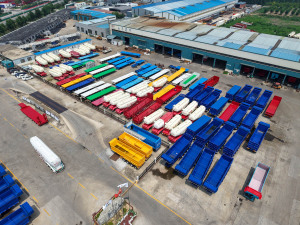
SHANDONG WONDERFUL AUTO COMPANY LIMITED is a heavy duty truck and semi-trailer supplier based in Qingdao, Shandong, whose product range includes heavy duty trucks as well as flatbed, lowbed, cement tanker, dump, fence and sidewall semi-trailers. The company operates a 113,000 m³ manufacturing facility with 500 employees, an annual output of 6,000 units and a 20-engineer R&D team. Export business accounts for 100% of total sales, with Africa as its major market — a single-region export focus that matters when a buyer needs repeat orders, spare-part planning and configuration changes handled by people who already know the destination market.
For long-term supply, capacity without engineering resource is only half a supplier. A 6,000-unit annual output and a 20-engineer R&D team are the two figures that determine whether a fleet can add units, adjust a specification or solve a field problem inside a normal procurement cycle. Delivery is arranged through FOB Qingdao and CIF Destination methods, which keeps a repeat-order pipeline straightforward once the first unit has passed acceptance.
FAQ
Does the SHACMAN X3000 configuration compared here meet EURO 5, and what should be verified before ordering?
Yes. The configuration compared here, the SHACMAN X3000 6×4 dump truck SX3258W384C, is specified with a CUMMINS ISM11E5 engine rated at 440 HP under EURO 5. The EURO 5 designation is not the whole compliance picture, however. Before ordering, verify the emission certification document for the exact unit, confirm that the fuel quality available on your site is compatible with the after-treatment system, and check destination-market rules. As a reference for how emission requirements tighten over time, the US EPA finalized its 'Phase 3' greenhouse gas standards for heavy-duty vehicles starting in model year 2027, requiring roughly an 80% reduction in NOx — fleets should plan on compliance requirements continuing to move.
What actually changes between a 440 HP and a 371 hp 6×4 dump truck in daily work?
The two configurations compared here differ in rated output — 440 HP (CUMMINS ISM11E5) in the SHACMAN X3000 SX3258W384C versus 371 hp (WD615.47) in the SINOTRUK ZZ3257N384GB1R — while both use a 6×4 drive layout. Rated output matters most where the truck spends sustained time climbing under load, where round-trip distances are long, and where daily tonnage is the commercial target; documented platform data for the X3000 family records a maximum climbing gradient of ≥20% under full load, with 15% stronger climbing power than competitors and less gear shifting on long uphill roads. A lower rating is not automatically a disadvantage: on flatter sites with short haul cycles, a 371 hp configuration can complete the same duty cycle with more purchase budget left over. The answer comes from the grade profile, payload and annual hours of your own operation, not from the horsepower figure alone.
What are the purchasing terms for ordering these trucks?
Purchasing terms for the programme are: minimum order quantity of 1 unit; delivery arranged through FOB Qingdao or CIF Destination methods; payment of 30% T/T in advance with 70% T/T against a copy of the bill of lading; and a pre-shipment test as the acceptance criterion. These four terms should be confirmed identically in the quotation, the sales contract and the shipping instruction, because they define the point at which ownership, cost and risk transfer between buyer and supplier.
How is a heavy duty dump truck validated before it ships?
The agreed acceptance criterion is a pre-shipment test, which is where the specification in a contract becomes a physical check on the unit before loading. Buyers should use that stage to confirm the engine and model plate match the ordered configuration, to review the emission documentation, and to confirm that the chassis, cooling system and safety equipment are as specified. Because a 6×4 dump truck is bought against a duty cycle rather than a brochure, the pre-shipment test is also the moment to verify that options agreed during negotiation — such as ADAS (automatic braking and blind-spot cameras) and ESC — are actually fitted and functioning.
How do I choose a long-term Heavy Duty Truck supply partner rather than just a seller?
Judge a supply partner on four things: documented production and engineering capacity, export focus, familiarity with your destination market, and willingness to stay involved after delivery. SHANDONG WONDERFUL AUTO COMPANY LIMITED operates a 113,000 m³ manufacturing facility with 500 employees, an annual output of 6,000 units and a 20-engineer R&D team, and 100% of its sales are export sales, with Africa as its major market. That combination — capacity, engineering resource and a single-region export focus — is what makes repeat orders, spare-part planning and specification changes practical rather than theoretical. The practical next step is a project-specific proposal: send your haul profile, gradient data and target annual tonnage to the team at wonderful-autos.com, and request a configuration recommendation together with a sample and delivery plan.
Conclusion: Making the Call
The SHACMAN X3000 6×4 dump truck (SX3258W384C) and the SINOTRUK 6×4 dump truck (ZZ3257N384GB1R) solve the same job with different margins. The X3000 configuration brings 440 HP from a CUMMINS ISM11E5 engine under EURO 5, supported by documented platform data on frame rigidity, cooling capacity, climbing ability and fuel efficiency. The SINOTRUK configuration brings the WD615.47 at 371 hp on the same 6×4 layout, which is a reasonable match for shorter, flatter construction cycles where the route does not demand the higher rating.
The decision that holds up is the one made in this order: duty cycle first, worst loaded grade second, chassis and cooling third, compliance fourth, commercial terms fifth, and lifecycle support last. That sequence is what turns a spec comparison into a fleet decision — and it is the same sequence that a long-term supply partner should be able to support with documentation, not assurances.
Ready to move from comparison to configuration? Send your haul profile, gradient data and target annual tonnage, and request a project-specific quotation, sample arrangement and delivery plan for the SHACMAN X3000 6×4 dump truck or the SINOTRUK 6×4 dump truck.
Contact: Coffey | Email: Coffey@wonderful-autos.com | Tel / WhatsApp: +8615020072752
Download the product catalogue: Wonderful Auto PDF catalogue
SHANDONG WONDERFUL AUTO COMPANY LIMITED | Room 1301, Building 1, No.8 Zhilidao Road, High-Tech Zone, Qingdao, Shandong | wonderful-autos.com
Have Questions or Need More Details?
Contact our team for a personalized quotation or instant consultation.
Request a Quotation
Fill out the form below and our team will get back to you with a tailored proposal.
WhatsApp Direct Chat
Prefer to chat in real-time? Message us on WhatsApp for instant assistance & quick answers.
- Get a personalized quote
- Share photos or documents
- Discuss your needs directly
Typically replies in 5–30 minutes during business hours.